

Description
Pinealon Technical Overview
Pinealon is a synthetic three-amino-acid peptide with the sequence Glu-Asp-Arg, commonly abbreviated EDR. It belongs to a group of short peptide bioregulators investigated in cellular and molecular research.
The compound consists of L-glutamic acid, L-aspartic acid, and L-arginine connected in a defined linear sequence.
Pinealon has attracted scientific interest in experimental research involving short peptide transport, molecular interactions, neuronal cellular responses, and regulatory pathways associated with cellular stress.
Studies involving Pinealon and related peptides have explored the ability of short peptide structures to participate in molecular interactions within experimental cell systems. However, the biological significance and clinical applicability of these findings remain uncertain.
Compound Specifications
| Property | Value |
|---|---|
| Compound Name | Pinealon |
| Alternative Names | EDR, Glu-Asp-Arg |
| Chemical Name | L-Glutamyl-L-aspartyl-L-arginine |
| CAS Number | 175175-23-2 |
| Molecular Formula | C15H26N6O8 |
| Molecular Weight | 418.40 g/mol |
| Sequence | H-Glu-Asp-Arg-OH |
| One-Letter Sequence | EDR |
| Sequence Length | 3 amino acid residues |
| Peptide Structure | Linear tripeptide |
| Peptide Classification | Short peptide bioregulator |
| Source | Synthetic |
| Vial Content | 10mg |
| Research Category | Peptide Bioregulation Research |
Chemical specifications describe the unmodified EDR tripeptide. The composition of salt forms and other preparations may differ.
Storage and Handling
- Store according to the manufacturer’s recommended stability conditions.
- Protect the compound from moisture and direct light.
- Keep containers tightly sealed.
- Avoid unnecessary temperature fluctuations.
- Follow appropriate laboratory handling procedures.
Lyophilized Format
Pinealon may be prepared as a lyophilized research peptide. Lyophilization reduces moisture content and can support stability during storage under suitable conditions.
The exact formulation and storage requirements should be confirmed using manufacturer-provided technical documentation.
Research Use Disclaimer
Pinealon is intended exclusively for laboratory research. It is not an FDA-approved medicine and is not intended for human or veterinary consumption, diagnosis, or therapeutic administration.
Frequently Asked Questions
What Is Pinealon 10mg?
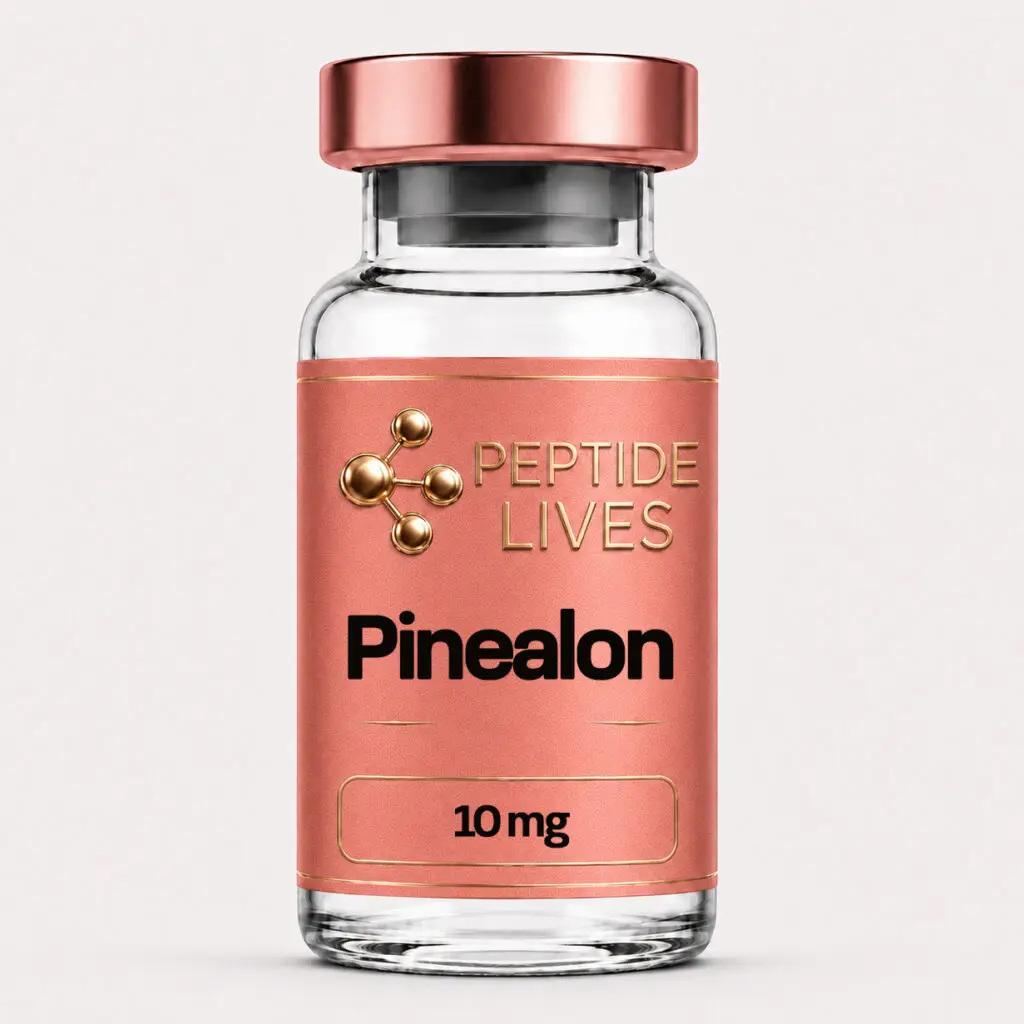
Pinealon 10mg is a research preparation of the synthetic Glu-Asp-Arg tripeptide.
What Is the Amino Acid Sequence?
The sequence is H-Glu-Asp-Arg-OH, abbreviated EDR.
What Are Its CAS Number and Molecular Weight?
Pinealon has CAS number 175175-23-2 and a molecular weight of approximately 418.40 g/mol.
What Research Areas Involve Pinealon?
Research areas include short peptide chemistry, cellular interactions, molecular transport, neuronal cell responses, and experimental gene regulation.
How Does Pinealon Differ From ViLon?
Pinealon is a tripeptide with the sequence EDR, while ViLon is a dipeptide with the sequence KE.
Is Pinealon FDA-Approved?
No. Pinealon is not FDA-approved for human therapeutic use.
Research Overview
Pinealon has been included in research investigating the biological and physicochemical properties of ultrashort peptides.
Its minimal three-amino-acid structure allows comparisons with other peptide bioregulators to explore relationships between amino acid sequences and experimental cellular responses.
Peptide Transport Research
Experimental studies using fluorescently labeled short peptides have investigated their distribution in cultured cells. Pinealon has been examined alongside other short peptides in subcellular localization experiments.
Peptide-DNA Interaction Research
Published investigations have examined interactions between short peptide sequences and nucleic acids under controlled laboratory conditions.
These studies provide information about molecular binding behavior but do not establish direct regulation of specific genes in living humans.
Neuronal Research
Pinealon has been discussed in experimental research involving neuronal cellular responses and biological stress mechanisms.
Proposed neuroprotective activity remains preliminary and requires additional independent investigation.
Cellular Regulation Research
Research into peptide bioregulators has explored possible relationships between short peptide structures and cellular regulatory pathways.
Specific physiological effects attributed to Pinealon require confirmation in well-characterized experimental models.
Research Applications
| Research Area | In Vitro Application |
|---|---|
| Peptide Transport | Cellular uptake and localization assays |
| Molecular Interactions | Peptide-nucleic acid binding studies |
| Neuronal Research | Experimental neuronal response assays |
| Peptide Chemistry | Short peptide structural characterization |
References
- Fedoreyeva LI, Kireev II, Khavinson VKh, Vanyushin BF. (2011). Penetration of Short Fluorescence-Labeled Peptides into the Nucleus in HeLa Cells and In Vitro Specific Interaction of the Peptides with Deoxyribooligonucleotides and DNA. Biochemistry (Moscow). DOI: 10.1134/S0006297911110022.
Certificate of Analysis (COA)
A Certificate of Analysis provides information about the identity, purity, and measured chemical characteristics of a specific research compound.
Researchers should verify the Pinealon sequence, molecular identity, and actual content using analytical documentation corresponding to the supplied batch.
For information about available documentation, contact Peptide Lives.

Reviews
There are no reviews yet.