

Description
Oxytocin Acetate Technical Overview
Oxytocin Acetate is an acetate preparation of oxytocin, a naturally occurring nine-amino-acid peptide hormone synthesized by hypothalamic neurons.
Oxytocin participates in reproductive physiology and neuroendocrine signaling. Its established physiological functions include uterine smooth muscle contraction and milk ejection.
The peptide interacts primarily with the oxytocin receptor (OXTR), a G protein-coupled receptor involved in intracellular signaling pathways. Oxytocin has also been extensively investigated in research involving neural circuits, social behavior, and endocrine communication.
Compound Specifications
| Property | Value |
|---|---|
| Compound Name | Oxytocin Acetate |
| Parent Peptide | Oxytocin |
| CAS Number | 6233-83-6 |
| Parent Peptide Formula | C43H66N12O12S2 |
| Parent Peptide Molecular Weight | Approximately 1007.19 g/mol |
| Amino Acid Sequence | CYIQNCPLG-NH2 |
| Sequence Length | 9 amino acid residues |
| Structural Feature | Intramolecular disulfide bond |
| Peptide Classification | Neuropeptide hormone |
| Receptor Target | OXTR |
| Source | Synthetic preparation |
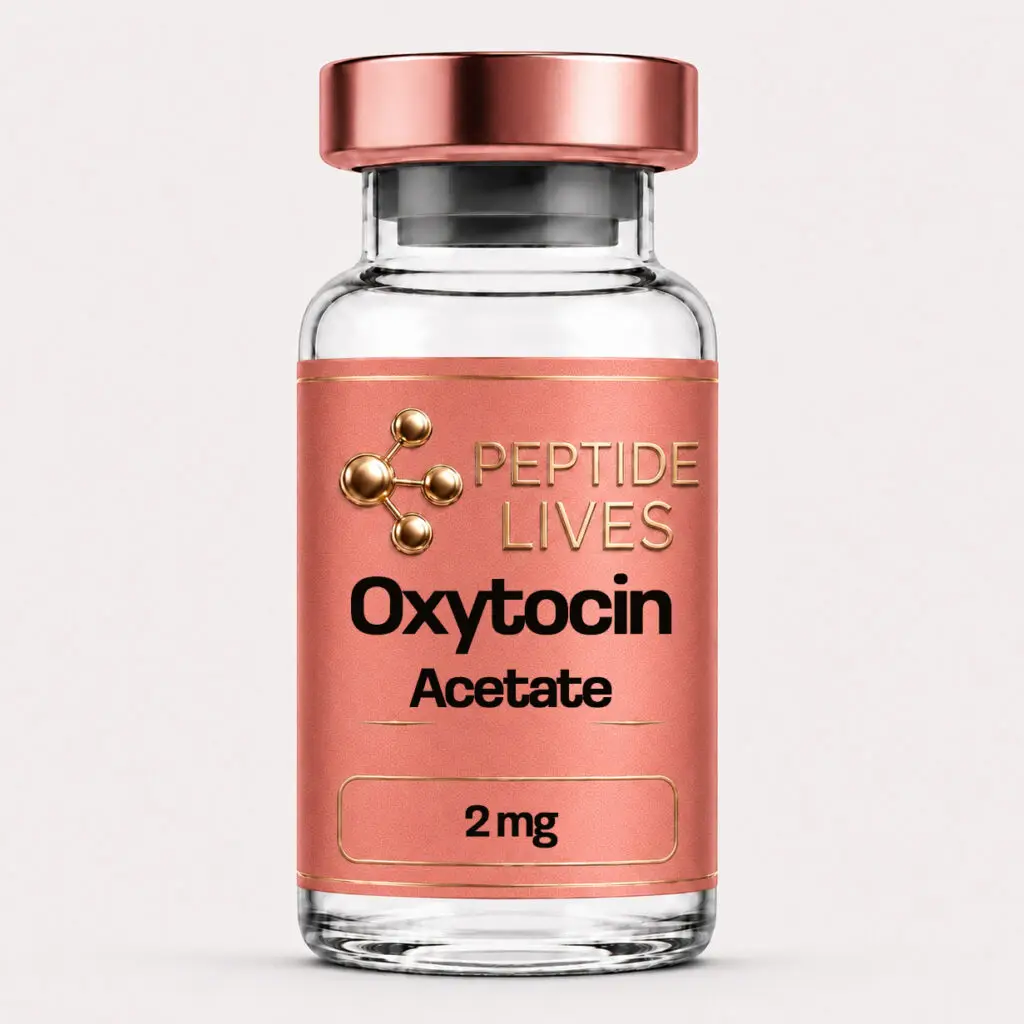
| Vial Content | 2mg |
| Research Category | Neuroendocrine Research |
The listed molecular formula and weight describe the oxytocin parent peptide. The composition and molecular weight of an acetate preparation depend on its actual acetate content.
Storage and Handling
- Store according to manufacturer-validated stability conditions.
- Protect the compound from moisture and excessive light exposure.
- Keep containers securely closed.
- Minimize contamination and unnecessary temperature fluctuations.
Lyophilized Format
Oxytocin Acetate may be prepared in lyophilized form. The formulation, appearance, and stability characteristics of this product require verification through batch documentation.
Research Use Disclaimer
Oxytocin is the active ingredient in certain FDA-approved prescription medicines. However, this specific research preparation is not represented as an approved pharmaceutical product. It is not intended for human or veterinary administration.
Frequently Asked Questions
What Is Oxytocin Acetate 2mg?
Oxytocin Acetate is an acetate preparation of the nine-amino-acid oxytocin peptide.
What Is the Amino Acid Sequence of Oxytocin?
The sequence is CYIQNCPLG-NH2, with a disulfide bond connecting its two cysteine residues.
What Is the Main Receptor Target?
Oxytocin interacts primarily with the oxytocin receptor, OXTR.
What Research Areas Involve Oxytocin?
Research includes reproductive physiology, neuroendocrine signaling, neural circuit activity, and behavioral biology.
Is This Research Preparation FDA-Approved?
No FDA approval is established for this specific Peptide Lives research preparation.
Research Overview
Oxytocin is among the best-characterized peptide hormones in mammalian physiology. Its activity involves receptor-mediated signaling in reproductive tissues and the nervous system.
Scientific investigations have examined receptor activation, intracellular calcium signaling, hypothalamic neuronal activity, and physiological responses associated with oxytocin release.
OXTR Signaling Research
OXTR is a G protein-coupled receptor that can activate phospholipase C-associated signaling pathways and intracellular calcium responses.
Reproductive Physiology Research
Oxytocin signaling plays established roles in uterine smooth muscle contraction and milk ejection. These physiological responses have been extensively characterized.
Neuroendocrine Research
Hypothalamic oxytocin-producing neurons participate in endocrine and neural signaling networks. Research examines their activity, receptor distribution, and patterns of peptide release.
Behavioral Neuroscience
Oxytocin has been investigated in relation to social and reproductive behavior. Experimental outcomes are dependent on biological context, species, and study design.
Research Applications
| Research Area | In Vitro Application |
|---|---|
| OXTR Research | Receptor activation assays |
| Cellular Signaling | Calcium and phospholipase C pathway studies |
| Reproductive Biology | Smooth muscle signaling research |
| Neuroendocrinology | Hormone receptor and neural signaling models |
References
- Jurek B, Neumann ID. (2018). The Oxytocin Receptor: From Intracellular Signaling to Behavior. Physiological Reviews. PubMed PMID: 29897293.
- PubChem — Oxytocin Chemical Record.
Certificate of Analysis (COA)
Researchers should confirm the peptide’s identity, acetate composition, purity, and actual content through batch-specific analytical documentation.
For available documentation, contact Peptide Lives.

Jina Weinhold –
The peptide worked well for me. I became calmer, my anxiety noticeably decreased, and I felt more balanced and emotionally steady. The effect wasn’t harsh or sudden — it felt gentle and gradual. Overall, I had a very good experience and I’m happy with my purchase.