

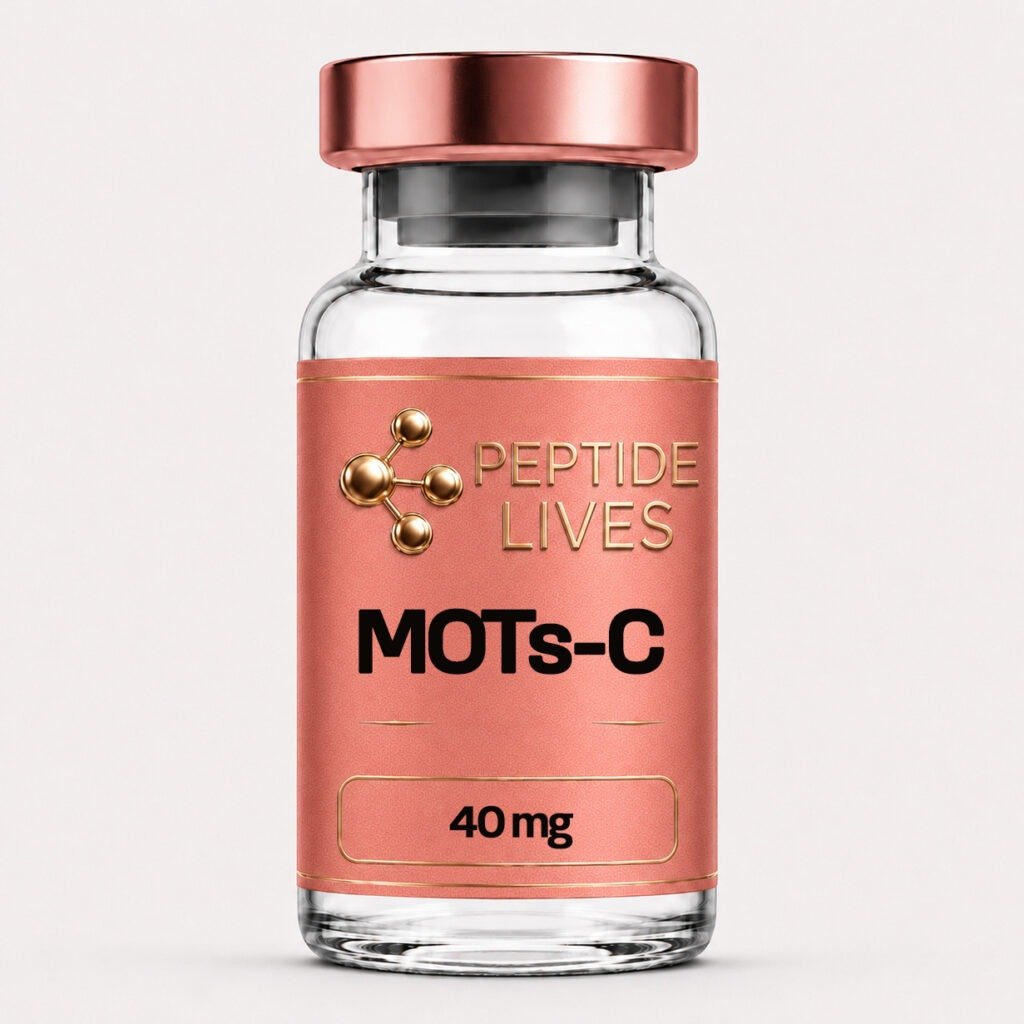
Description
MOTS-c Technical Overview
MOTS-c, or mitochondrial open reading frame of the 12S rRNA type-c, is a 16-amino-acid mitochondrial-derived peptide first characterized in 2015. Its coding sequence is located within the mitochondrial 12S rRNA region of mitochondrial DNA.
Unlike most signaling peptides derived from nuclear-encoded proteins, MOTS-c belongs to a group of peptides associated with mitochondrial genetic information. This makes it particularly relevant to research examining communication between mitochondria and the nucleus.
Published studies have investigated MOTS-c in relation to AMP-activated protein kinase (AMPK), folate and purine metabolism, cellular stress responses, and nuclear gene regulation.
Compound Specifications
| Property | Value |
|---|---|
| Compound Name | MOTS-c |
| Full Name | Mitochondrial Open Reading Frame of the 12S rRNA Type-c |
| CAS Number | 1627580-64-6 |
| PubChem CID | 146675088 |
| Molecular Formula | C101H152N28O22S2 |
| Molecular Weight | 2174.6 g/mol |
| Amino Acid Sequence | MRWQEMGYIFYPRKLR |
| Sequence Length | 16 amino acid residues |
| Peptide Structure | Linear peptide |
| Disulfide Bonds | None |
| Peptide Classification | Mitochondrial-derived peptide |
| Biological Origin | Mitochondrial 12S rRNA-associated open reading frame |
| Source | Synthetic research preparation |
| Vial Content | 40mg |
| Research Category | Mitochondrial and Metabolic Research |
Molecular specifications describe the unmodified MOTS-c peptide. The chemical composition of salt forms may differ.
Storage and Handling
- Follow the manufacturer’s validated peptide stability recommendations.
- Keep the research material protected from moisture and direct light.
- Minimize unnecessary temperature fluctuations.
- Avoid contamination during laboratory handling.
- Consult batch-specific documentation for formulation-dependent storage conditions.
Lyophilized Format
MOTS-c may be manufactured in lyophilized form. Freeze-drying can support stability by reducing residual moisture.
The actual physical form and long-term stability of the specific preparation depend on manufacturing and storage conditions.
Research Use Disclaimer
MOTS-c is an experimental research peptide and is not FDA-approved for human therapeutic use.
The compound is described exclusively for laboratory research and is not intended for human or veterinary administration.
Frequently Asked Questions
What Is MOTS-c 40mg?
MOTS-c 40mg is a research presentation of a 16-amino-acid mitochondrial-derived peptide associated with mitochondrial-nuclear communication.
What Is the Amino Acid Sequence of MOTS-c?
The sequence is MRWQEMGYIFYPRKLR.
What Are the CAS Number and Molecular Weight?
MOTS-c has CAS number 1627580-64-6 and a molecular weight of approximately 2174.6 g/mol.
What Is AMPK?
AMP-activated protein kinase is a cellular energy sensor involved in metabolic regulation.
What Research Areas Involve MOTS-c?
Research includes mitochondrial signaling, AMPK activation, folate metabolism, purine biosynthesis, and stress-responsive gene expression.
Is MOTS-c FDA-Approved?
No. MOTS-c is not FDA-approved for human therapeutic use.
Research Overview
MOTS-c was first described in 2015 in research demonstrating that a mitochondrial DNA-associated open reading frame encodes a short peptide involved in metabolic regulation.
Experimental studies reported that MOTS-c influenced folate-cycle and purine-related metabolism, with associated activation of AMPK.
Later investigations showed that MOTS-c can redistribute to the nucleus under specific cellular stress conditions, where it participates in changes to stress-responsive gene expression.
AMPK Signaling Research
AMPK is involved in cellular energy sensing and metabolic regulation.
Laboratory studies have examined MOTS-c-associated AMPK activation and changes in metabolic signaling.
Folate and Purine Metabolism Research
Research has investigated how MOTS-c influences folate-dependent one-carbon metabolism and de novo purine biosynthesis.
Experimental observations suggest that changes in these pathways contribute to downstream metabolic signaling responses.
Mitochondria-to-Nucleus Signaling
A 2018 study demonstrated nuclear translocation of MOTS-c in cultured cells exposed to metabolic and oxidative stress.
The findings support the investigation of mitochondrial-derived peptides as components of cellular communication systems.
Stress-Responsive Gene Expression
Research has examined MOTS-c-associated changes in nuclear gene expression, including pathways involving the stress-responsive transcription factor NRF2.
Metabolic Cell Research
MOTS-c has been studied in cultured muscle cells and animal models examining metabolic adaptation.
These experimental observations do not establish clinical effectiveness for metabolic conditions in humans.
Research Applications
| Research Area | In Vitro Application |
|---|---|
| AMPK Signaling | AMPK activation and phosphorylation assays |
| Folate Metabolism | One-carbon pathway metabolite profiling |
| Purine Metabolism | Purine biosynthesis pathway investigations |
| Mitochondrial Signaling | Mitochondria-to-nucleus communication studies |
| Cellular Stress | Stress-responsive gene expression assays |
| Muscle Cell Research | Experimental metabolic adaptation models |
References
- Lee C, Zeng J, Drew BG, et al. (2015). The Mitochondrial-Derived Peptide MOTS-c Promotes Metabolic Homeostasis and Reduces Obesity and Insulin Resistance. Cell Metabolism. View publication.
- Kim KH, Son JM, Benayoun BA, Lee C. (2018). The Mitochondrial-Encoded Peptide MOTS-c Translocates to the Nucleus to Regulate Nuclear Gene Expression in Response to Metabolic Stress. Cell Metabolism. View publication.
- PubChem — MOTS-c, CID 146675088.
Certificate of Analysis (COA)
Researchers should review batch-specific documentation confirming peptide identity, sequence, purity, and actual content.
For information about available analytical documentation, contact Peptide Lives.





Reviews
There are no reviews yet.