

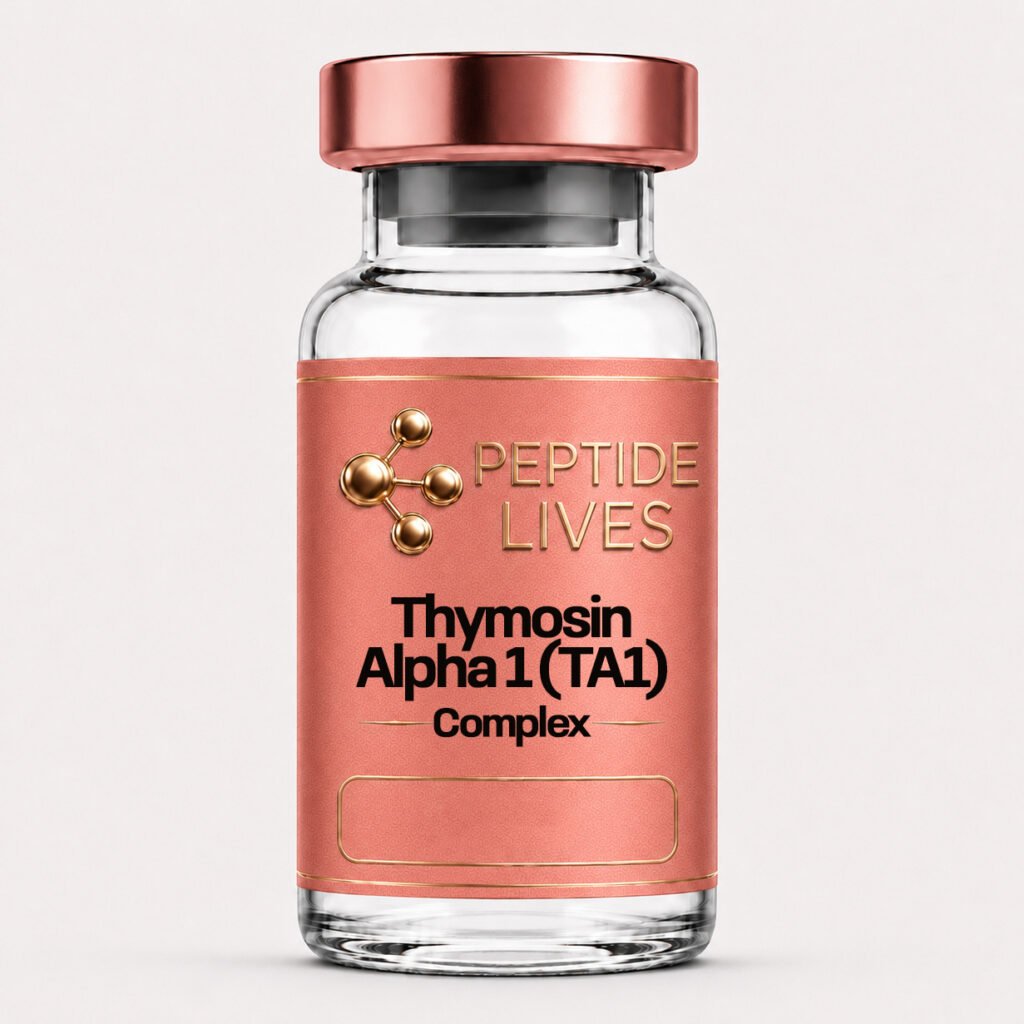
Description
Thymosin Alpha-1 Complex Technical Overview
Thymosin Alpha-1 (Tα1), also known as Thymalfasin, is a naturally occurring 28-amino-acid peptide originally isolated from thymic tissue. It is derived from the prothymosin alpha precursor and contains an acetylated N-terminal serine residue.
Thymosin Alpha-1 has been investigated in experimental immunology involving dendritic cell function, Toll-like receptor signaling, cytokine production, and immune-cell differentiation.
The designation “TA1 Complex” may refer to a specific formulation containing Thymosin Alpha-1 and additional components. Its exact composition determines whether published findings involving isolated Thymosin Alpha-1 apply to the complete preparation.
Compound Specifications
| Property | Value |
|---|---|
| Product Name | Thymosin Alpha 1 (TA1) Complex |
| Principal Research Peptide | Thymosin Alpha-1 |
| Alternative Name | Thymalfasin |
| Parent Peptide CAS | 62304-98-7 |
| Parent Peptide Formula | C129H215N33O55 |
| Parent Peptide Molecular Weight | 3108.3 g/mol |
| Peptide Sequence | Ac-SDAAVDTSSEITTKDLKEKKEVVEEAEN |
| Sequence Length | 28 amino acid residues |
| Terminal Modification | N-terminal acetylation |
| Complete Complex Composition | Formulation-specific |
| Vial Content | Not specified in product title |
| Research Category | Immunology Research |
Peptide specifications refer to Thymosin Alpha-1 itself. A formulation containing other substances may have additional analytical characteristics.
Storage and Handling
- Follow manufacturer-provided stability recommendations.
- Protect the preparation from moisture and direct light.
- Keep containers securely sealed.
- Use handling procedures appropriate for the complete formulation.
Lyophilized Format
Thymosin Alpha-1 may be manufactured as a lyophilized peptide. The physical form and storage requirements of a TA1 Complex depend on its specific formulation.
Research Use Disclaimer
This research preparation is not represented as an FDA-approved pharmaceutical product. It is intended exclusively for laboratory investigation and not for human or veterinary administration.
Frequently Asked Questions
What Is Thymosin Alpha-1?
Thymosin Alpha-1 is a 28-residue peptide investigated in immune-cell signaling and thymic peptide biology.
What Does TA1 Complex Mean?
The designation describes a commercial formulation associated with Thymosin Alpha-1. Additional ingredients, if present, are formulation-dependent.
What Is the Amino Acid Sequence?
Ac-SDAAVDTSSEITTKDLKEKKEVVEEAEN.
What Research Areas Involve TA1?
Research includes dendritic cell biology, Toll-like receptor signaling, cytokine expression, and immune-cell responses.
Is TA1 the Same as Thymosin Beta-4?
No. Thymosin Alpha-1 and Thymosin Beta-4 are different peptides with distinct molecular structures and research profiles.
Thymosin Alpha-1 Research Overview
Thymosin Alpha-1 has been investigated in experimental studies of innate and adaptive immune signaling. Its effects have been examined in cultured dendritic cells, macrophages, and other cellular systems.
Dendritic Cell Research
Published studies have examined changes in dendritic cell maturation markers and cytokine expression following Thymosin Alpha-1 exposure.
Toll-Like Receptor Signaling
Experimental research has investigated TLR-associated pathways, including MyD88-dependent signaling, p38 MAPK, and NF-κB.
Cytokine Regulation
Cellular studies have examined Thymosin Alpha-1-associated changes in interleukin expression under different experimental conditions.
Research Applications
| Research Area | In Vitro Application |
|---|---|
| Dendritic Cell Biology | Cell maturation marker analysis |
| TLR Signaling | Receptor pathway assays |
| Cytokine Research | Interleukin expression measurements |
| Peptide Chemistry | Thymosin Alpha-1 structural characterization |
References
- Romani L, et al. (2004). Thymosin alpha 1 activates dendritic cells for antifungal Th1 resistance through toll-like receptor signaling. Blood. View publication.
- Romani L, et al. (2006). Thymosin alpha1 activates dendritic cell tryptophan catabolism and establishes a regulatory environment for balance of inflammation and tolerance. Blood. View publication.
Certificate of Analysis (COA)
Analytical documentation should identify all components of the preparation, their quantities, molecular identities, and relevant quality characteristics.
For available product documentation, contact Peptide Lives.

Reviews
There are no reviews yet.