

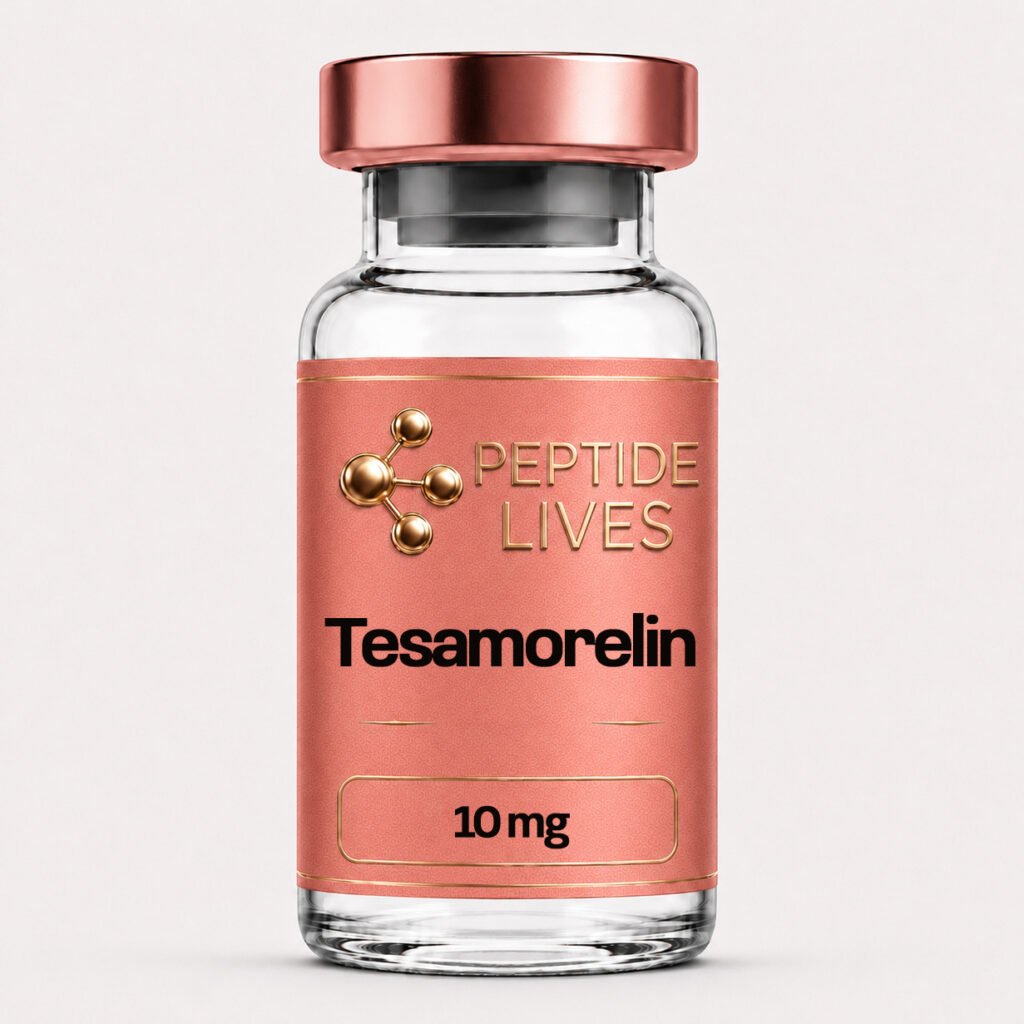
Description
Tesamorelin Technical Overview
Tesamorelin is a synthetic 44-amino-acid analogue of growth hormone-releasing hormone (GHRH), modified with an N-terminal trans-3-hexenoyl group.
The peptide activates the GHRH receptor and is investigated in research involving growth hormone signaling, pituitary endocrine function, and IGF-1 regulation.
Published clinical studies have evaluated Tesamorelin in defined metabolic settings. Their findings do not establish the properties of independently manufactured research formulations.
Compound Specifications
| Property | Value |
|---|---|
| Compound Name | Tesamorelin |
| Classification | Modified GHRH analogue |
| Sequence Length | 44 residues |
| Modification | N-terminal trans-3-hexenoyl group |
| Research Receptor | GHRHR |
| Vial Content | 10mg |
| Research Category | Endocrine Research |
Storage and Handling
- Follow manufacturer-validated storage recommendations.
- Protect from moisture, light, and contamination.
- Minimize unnecessary temperature fluctuations.
Lyophilized Format
Tesamorelin may be manufactured in lyophilized form. Stability depends on formulation and packaging.
Research Use Disclaimer
FDA-approved prescription Tesamorelin formulations exist for specific indications. No pharmaceutical approval is claimed for this research preparation. Not intended for human or veterinary administration.
Frequently Asked Questions
What Is Tesamorelin?
A synthetic 44-amino-acid GHRH analogue.
What Is Its Receptor?
GHRHR.
How Is It Different From Sermorelin?
Tesamorelin is a modified 44-residue peptide; Sermorelin contains 29 residues.
What Research Areas Involve Tesamorelin?
Pituitary signaling, GH regulation, and IGF-1 biology.
Is This Product an Approved Pharmaceutical?
No approval is claimed for this preparation.
Research Overview
Tesamorelin is investigated in GHRH receptor-related endocrine research.
GHRHR Research
Studies investigate receptor activation and intracellular signaling.
Growth Hormone Regulation
Clinical and experimental research examines growth hormone responses.
IGF-1 Signaling
Studies evaluate downstream growth factor regulation.
Research Applications
| Research Area | In Vitro Application |
|---|---|
| GHRHR | Receptor activation assays |
| Endocrine Signaling | cAMP pathway studies |
| Peptide Chemistry | Modified GHRH characterization |
References
- Falutz J, Allas S, Blot K, et al. (2007). Metabolic Effects of a Growth Hormone-Releasing Factor in Patients With HIV. New England Journal of Medicine. Publication record.
Certificate of Analysis (COA)
Documentation should establish peptide identity, N-terminal modification, purity, and content.


Reviews
There are no reviews yet.