

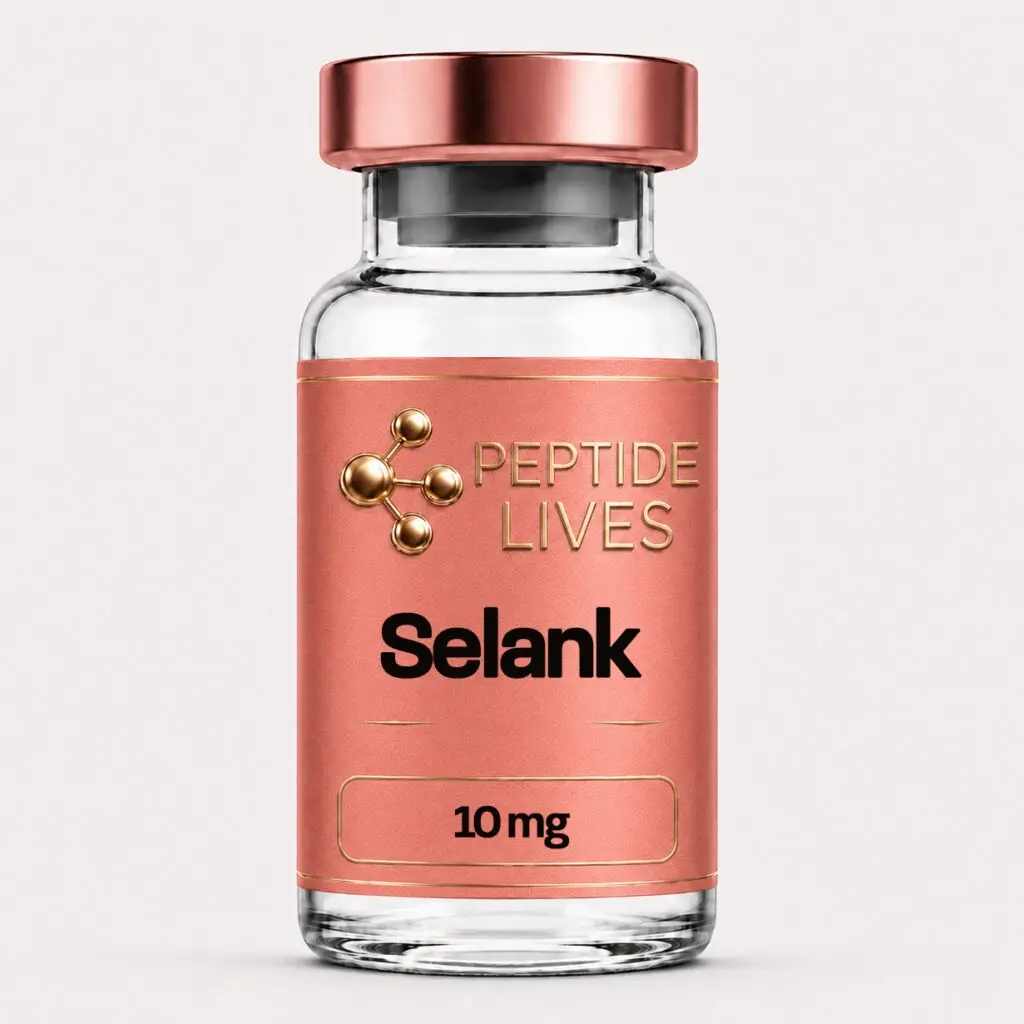
Description
Selank Technical Overview
Selank is a synthetic seven-amino-acid peptide derived from the tuftsin-related Thr-Lys-Pro-Arg sequence, extended with Pro-Gly-Pro.
Experimental research has examined Selank-associated gene expression changes, neurochemical signaling, immune-related pathways, and behavioral responses.
The peptide has been investigated in animal research involving stress-associated behavior. Clinical effectiveness of research-grade Selank preparations has not been established.
Compound Specifications
| Property | Value |
|---|---|
| Compound Name | Selank |
| Classification | Tuftsin-derived heptapeptide |
| Sequence | TKPRPGP |
| Sequence Length | 7 residues |
| Parent-Related Peptide | Tuftsin |
| Vial Content | 10mg |
| Research Category | Neuropeptide Research |
Storage and Handling
- Follow the manufacturer’s stability recommendations.
- Protect from moisture and light.
- Use suitable laboratory handling procedures.
Lyophilized Format
Selank may be manufactured in lyophilized form. Stability depends on the finished preparation.
Research Use Disclaimer
Selank is not FDA-approved for human therapeutic use. Intended for laboratory research only.
Frequently Asked Questions
What Is Selank?
A synthetic tuftsin-derived heptapeptide.
What Is Its Sequence?
TKPRPGP.
Is Selank the Same as Semax?
No. They are structurally different peptides.
What Research Areas Involve Selank?
Neurochemical signaling, gene expression, and immune-related research.
Research Overview
Selank has been investigated in experimental neuropeptide biology.
Neurochemical Signaling
Research explores neurotransmitter-associated pathways.
Gene Expression
Studies investigate transcriptional responses.
Immune-Associated Signaling
Research examines selected pathways related to its tuftsin-derived structure.
Research Applications
| Research Area | In Vitro Application |
|---|---|
| Gene Expression | Transcriptional analysis |
| Neuropeptide Research | Cell signaling assays |
| Peptide Chemistry | Sequence characterization |
References
Certificate of Analysis (COA)
Documentation should confirm peptide identity, terminal groups, purity, and actual content.

Reviews
There are no reviews yet.