

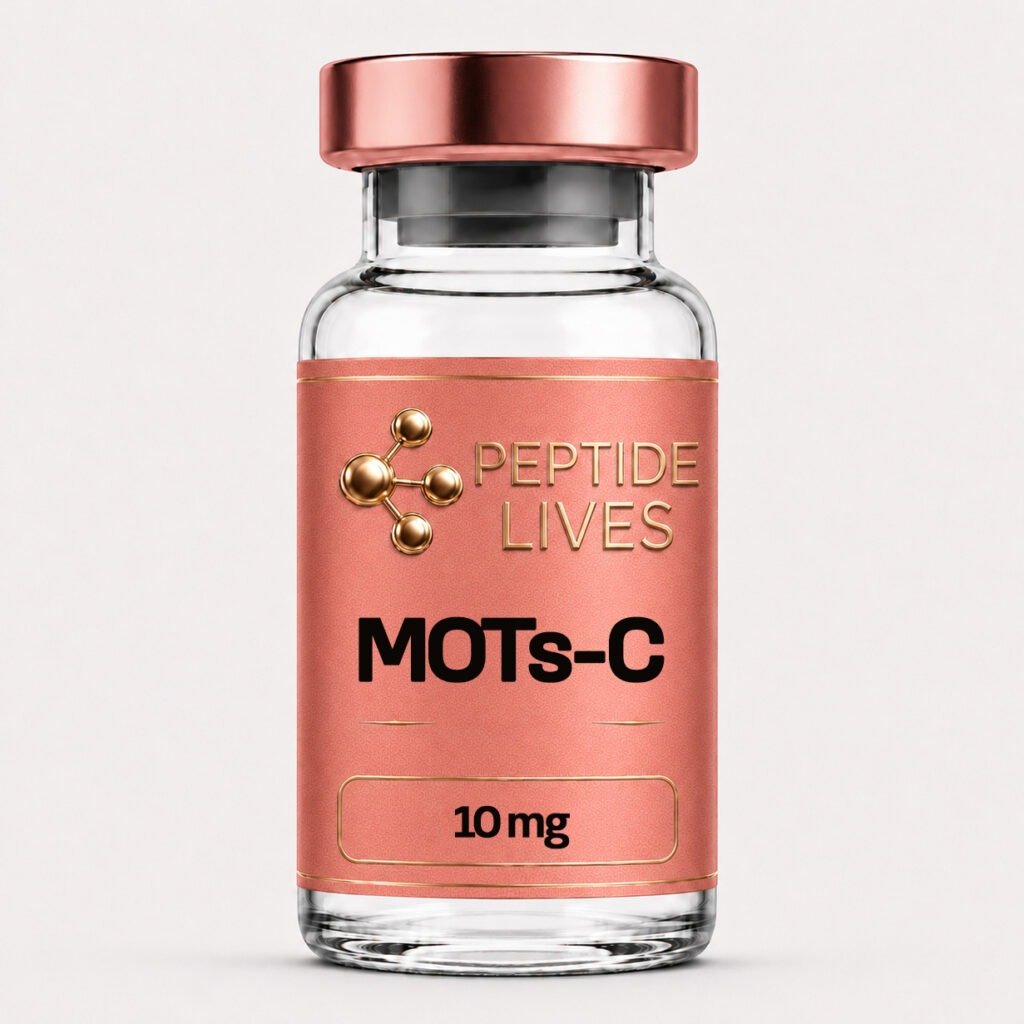
Description
MOTS-c Technical Overview
MOTS-c is a 16-amino-acid mitochondrial-derived peptide encoded within a short open reading frame associated with the mitochondrial 12S rRNA region.
It was first characterized in 2015 and has been investigated in experimental research involving mitochondrial signaling, AMPK activation, metabolic regulation, and cellular stress responses.
Published studies have examined MOTS-c-associated changes in folate and purine metabolism, nuclear gene expression, and communication between mitochondria and the nucleus.
Compound Specifications
| Property | Value |
|---|---|
| Compound Name | MOTS-c |
| CAS Number | 1627580-64-6 |
| Amino Acid Sequence | MRWQEMGYIFYPRKLR |
| Sequence Length | 16 residues |
| Classification | Mitochondrial-derived peptide |
| Related Biological Region | Mitochondrial 12S rRNA |
| Research Category | Mitochondrial and Metabolic Research |
| Vial Content | 10mg |
Storage and Handling
- Follow manufacturer-validated stability recommendations.
- Protect from moisture, light, and contamination.
- Maintain suitable laboratory peptide handling conditions.
Lyophilized Format
MOTS-c may be manufactured as a lyophilized research peptide. Stability depends on the formulation and packaging.
Research Use Disclaimer
MOTS-c is not FDA-approved for human therapeutic use. Intended exclusively for laboratory research and not for human or veterinary administration.
Frequently Asked Questions
What Is MOTS-c?
A mitochondrial-derived peptide containing 16 amino acid residues.
What Is Its Sequence?
MRWQEMGYIFYPRKLR.
What Is AMPK?
AMP-activated protein kinase, a cellular energy sensor.
What Research Areas Involve MOTS-c?
Mitochondrial signaling, metabolic regulation, and cellular stress responses.
MOTS-c Research Overview
MOTS-c has been studied in experimental research linking mitochondrial-derived peptides with cellular metabolic regulation.
AMPK Research
Studies have examined MOTS-c-associated activation of AMP-activated protein kinase pathways.
Folate and Purine Metabolism
Published research has investigated changes in folate-dependent one-carbon metabolism and purine biosynthesis.
Mitochondria-to-Nucleus Communication
Laboratory experiments have examined MOTS-c nuclear translocation under selected cellular stress conditions.
Research Applications
| Research Area | In Vitro Application |
|---|---|
| AMPK | Phosphorylation assays |
| Metabolism | Folate and purine pathway studies |
| Cellular Stress | Stress-response assays |
| Gene Expression | Nuclear transcription studies |
References
- Lee C, et al. (2015). The Mitochondrial-Derived Peptide MOTS-c Promotes Metabolic Homeostasis and Reduces Obesity and Insulin Resistance. Cell Metabolism. View publication.
- Kim KH, et al. (2018). The Mitochondrial-Encoded Peptide MOTS-c Translocates to the Nucleus to Regulate Nuclear Gene Expression in Response to Metabolic Stress. Cell Metabolism. Publication information.
Certificate of Analysis (COA)
Documentation should verify the MOTS-c sequence, chemical identity, purity, and content.





Julia –
MOT-C has been a really good experience for me. I feel noticeably less tired, my energy is better, and the best part is that my weight finally started moving down. Honestly, I’m super happy with it.