

Description
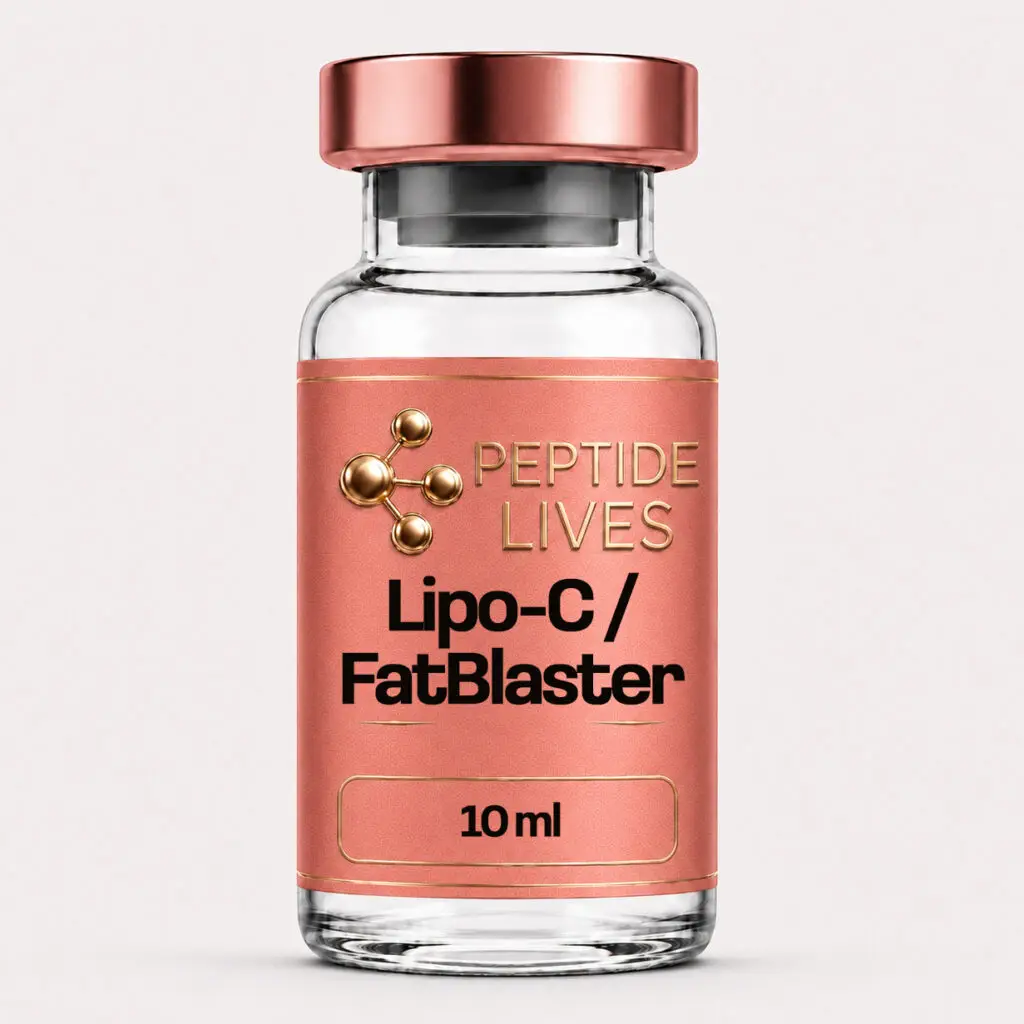
Lipo-C / FatBlaster Technical Overview
Lipo-C / FatBlaster is a commercial name used for multi-ingredient lipotropic formulations. Depending on the manufacturer, these preparations may contain combinations of amino acids, choline-related compounds, inositol, L-carnitine, and B vitamins.
Lipotropic compounds are investigated in biochemical research involving hepatic lipid metabolism, phospholipid synthesis, methyl-group transfer, and cellular energy pathways.
Individual compounds commonly used in lipotropic formulations have established biochemical functions. However, the activity of a specific combination depends on its actual ingredients, concentrations, and formulation characteristics.
The name FatBlaster does not identify a standardized chemical composition. The precise formula of this Peptide Lives product must therefore be established from manufacturer documentation.
Compound Specifications
| Property | Value |
|---|---|
| Product Name | Lipo-C / FatBlaster |
| Compound Classification | Multi-ingredient lipotropic formulation |
| Listed Volume | 10mL |
| Complete Ingredient List | Requires manufacturer confirmation |
| Individual Concentrations | Requires manufacturer confirmation |
| Single CAS Number | Not applicable to a mixture |
| Single Molecular Formula | Not applicable |
| Single Molecular Weight | Not applicable |
| Physical Form | Liquid formulation, subject to confirmation |
| Research Category | Metabolic Research |
Commercial names such as Lipo-C and FatBlaster do not establish the presence or concentration of any specific ingredient. Each component should be confirmed using the manufacturer’s formulation sheet.
Storage and Handling
- Store according to the manufacturer’s validated stability conditions.
- Protect the preparation from contamination and unnecessary light exposure.
- Keep the container securely closed.
- Follow formulation-specific handling procedures.
- Do not assume that stability data for individual ingredients apply to the finished mixture.
Lyophilized Format
Not applicable to a confirmed liquid formulation. Lipo-C / FatBlaster is listed as a 10mL product. Its actual physical form should be verified against manufacturer documentation.
Research Use Disclaimer
This formulation is described for laboratory research purposes only. It is not represented as an FDA-approved weight-management or injectable pharmaceutical product.
No therapeutic effectiveness, weight-loss benefit, or suitability for human administration has been established for this specific preparation.
Frequently Asked Questions
What Is Lipo-C / FatBlaster 10ml?
It is a product marketed under a commercial name commonly associated with multi-ingredient lipotropic formulations.
What Ingredients Does FatBlaster Contain?
The exact ingredients and concentrations depend on the manufacturer and must be confirmed using product-specific documentation.
Is Lipo-C a Single Peptide?
No. Lipo-C formulations generally consist of multiple compounds rather than one chemically defined peptide.
What Research Areas Involve Lipotropic Compounds?
Relevant research includes lipid metabolism, phospholipid synthesis, cellular methylation, and mitochondrial metabolic pathways.
Has This Specific Formula Been Proven Effective for Weight Loss?
No clinical effectiveness has been established for the specific Peptide Lives preparation from its commercial name alone.
Research Overview
Lipotropic formulations are associated with biochemical research involving compounds that participate in lipid transport, hepatic metabolism, and cellular methylation.
Because formulations vary, scientific findings about individual ingredients cannot automatically be attributed to an unidentified commercial mixture.
Phospholipid Metabolism Research
Choline-containing compounds are relevant to research involving phosphatidylcholine synthesis and cellular membrane composition.
Methyl-Group Metabolism Research
Selected lipotropic nutrients participate in one-carbon metabolism and related methylation pathways.
Hepatic Lipid Metabolism Research
Experimental investigations have examined how nutrient availability influences hepatic lipid handling and lipoprotein-related pathways.
Formulation Compatibility Research
Multi-ingredient preparations require analytical evaluation of chemical compatibility, concentration, stability, and degradation products.
Research Applications
| Research Area | In Vitro Application |
|---|---|
| Lipid Metabolism | Biochemical lipid pathway investigations |
| Phospholipid Research | Membrane lipid metabolism studies |
| Methylation Research | One-carbon metabolism assays |
| Formulation Research | Ingredient compatibility and stability analysis |
References
- Zeisel SH, da Costa KA. (2009). Choline: An Essential Nutrient for Public Health. Nutrition Reviews. View publication.
- Ueland PM. (2011). Choline and Betaine in Health and Disease. Journal of Inherited Metabolic Disease. View publication.
These references describe the biochemistry of individual nutrients. They do not establish the properties of an unidentified FatBlaster formulation.
Certificate of Analysis (COA)
Batch-specific documentation should identify every ingredient and its concentration, the total formulation volume, relevant stability characteristics, and analytical quality results.
For information about available documentation, contact Peptide Lives.

Reviews
There are no reviews yet.