

Description
Kisspeptin-10 Technical Overview
Kisspeptin-10 is a synthetic decapeptide corresponding to the biologically active C-terminal region of naturally occurring kisspeptin peptides.
Kisspeptins are derived from the KISS1 gene and interact with the kisspeptin receptor, known as KISS1R or GPR54.
Kisspeptin-10 has been investigated extensively in reproductive endocrinology because kisspeptin signaling is an important regulator of gonadotropin-releasing hormone (GnRH) neuronal activity.
Experimental studies have examined receptor activation, GnRH signaling, and associated reproductive hormone pathways.
Compound Specifications
| Property | Value |
|---|---|
| Compound Name | Kisspeptin-10 |
| Alternative Name | Metastin 45–54 |
| CAS Number | 374675-21-5 |
| Amino Acid Sequence | YNWNSFGLRF-NH2 |
| Sequence Length | 10 amino acid residues |
| Peptide Structure | Linear, C-terminal amidated peptide |
| Receptor Target | KISS1R / GPR54 |
| Peptide Classification | Kisspeptin receptor agonist |
| Source | Synthetic |
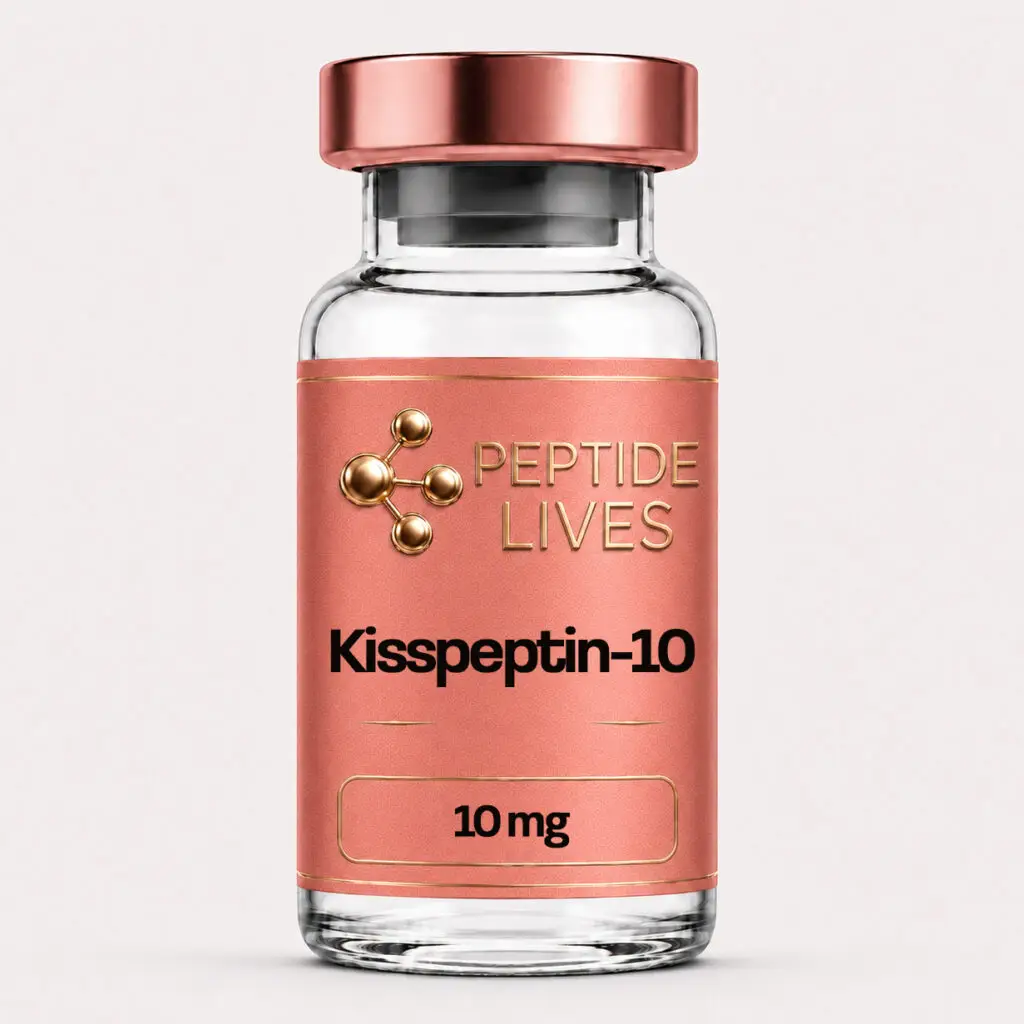
| Vial Content | 10mg |
| Research Category | Reproductive Endocrinology Research |
The complete molecular composition depends on terminal modifications and any counterions present in the supplied preparation.
Storage and Handling
- Store according to the manufacturer’s validated stability recommendations.
- Protect the material from moisture and direct light.
- Keep containers securely closed.
- Use suitable laboratory handling procedures to maintain peptide integrity.
Lyophilized Format
Kisspeptin-10 may be prepared in lyophilized form. The stability and physical characteristics of the supplied preparation should be confirmed through manufacturer documentation.
Research Use Disclaimer
Kisspeptin-10 is not FDA-approved for human therapeutic use. This research preparation is not intended for human or veterinary administration, diagnosis, or therapeutic application.
Frequently Asked Questions
What Is Kisspeptin-10 10mg?
Kisspeptin-10 is a synthetic ten-amino-acid peptide corresponding to the active C-terminal region of kisspeptin.
What Is Its Amino Acid Sequence?
The sequence is YNWNSFGLRF-NH2.
Which Receptor Does Kisspeptin-10 Activate?
Kisspeptin-10 interacts with KISS1R, also known as GPR54.
What Research Areas Involve Kisspeptin-10?
Research includes GnRH signaling, hypothalamic activity, reproductive hormone regulation, and receptor pharmacology.
Is Kisspeptin-10 Approved for Human Use?
No. Kisspeptin-10 is not FDA-approved for therapeutic use.
Research Overview
Studies identifying the relationship between kisspeptin signaling and reproductive endocrine regulation established KISS1R as an important component of the hypothalamic-pituitary-gonadal axis.
Experimental research demonstrated that kisspeptin-related peptides can influence GnRH neuronal activity, which contributes to the regulation of downstream gonadotropin signaling.
KISS1R Receptor Research
Kisspeptin-10 activates KISS1R, a G protein-coupled receptor involved in reproductive endocrine signaling.
GnRH Signaling Research
Scientific investigations have examined kisspeptin-associated activation of GnRH neurons and related neuroendocrine responses.
Hypothalamic-Pituitary Research
Research has explored the relationship between kisspeptin activity and the regulation of luteinizing hormone and follicle-stimulating hormone pathways.
Reproductive Maturation Research
Genetic and physiological investigations have established an important role for KISS1R signaling in reproductive maturation and endocrine development.
Research Applications
| Research Area | In Vitro Application |
|---|---|
| KISS1R Research | Receptor binding and activation assays |
| GnRH Signaling | Neuronal signaling measurements |
| Reproductive Endocrinology | Hormone regulatory pathway studies |
| Neuroendocrine Research | Hypothalamic cell signaling models |
References
- Messager S, Chatzidaki EE, Ma D, et al. (2005). Kisspeptin Directly Stimulates Gonadotropin-Releasing Hormone Release via G Protein-Coupled Receptor 54. Proceedings of the National Academy of Sciences. PubMed PMID: 15665093.
Certificate of Analysis (COA)
Batch-specific documentation should establish the peptide sequence, identity, purity, and actual compound content.
For available documentation, contact Peptide Lives.

Reviews
There are no reviews yet.