

Description
Prostamax Technical Overview
Prostamax is a short synthetic peptide bioregulator associated with research involving prostate tissue and cellular regulation.
Commercial descriptions commonly identify Prostamax as a defined peptide compound, although its exact sequence must be distinguished from similarly named peptide bioregulators.
Studies of short peptide bioregulators have explored relationships between amino acid sequence, cellular gene expression, and tissue-associated regulatory pathways.
Compound Specifications
| Property | Value |
|---|---|
| Compound Name | Prostamax |
| Classification | Short peptide bioregulator |
| Research Category | Prostate Cell Biology Research |
| Complete Sequence | Use product-specific structural documentation |
| Molecular Formula | Sequence-dependent |
| Molecular Weight | Sequence-dependent |
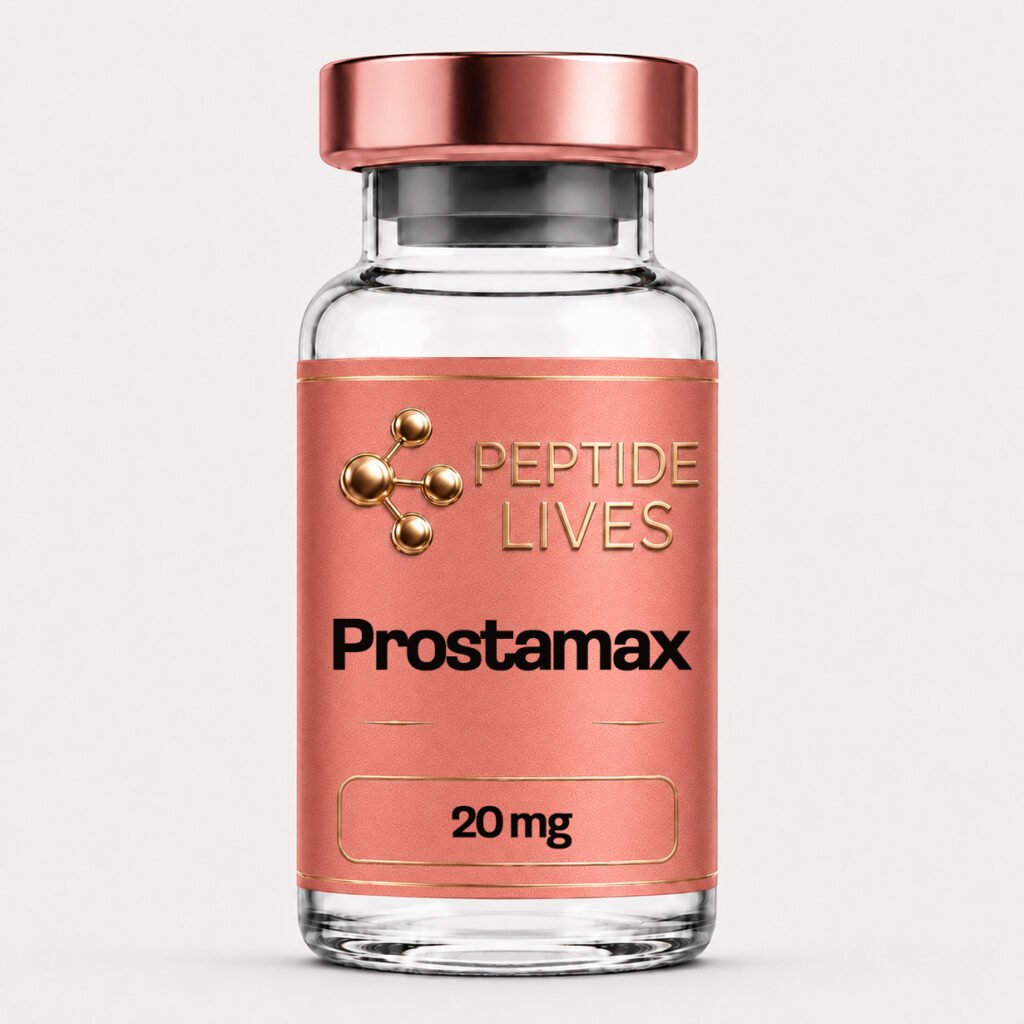
| Vial Content | 20mg |
Storage and Handling
- Follow manufacturer-validated stability guidance.
- Protect from moisture, direct light, and contamination.
- Use laboratory procedures appropriate for synthetic peptides.
Lyophilized Format
Prostamax may be supplied in lyophilized form. Physical properties depend on its confirmed formulation.
Research Use Disclaimer
Prostamax is not FDA-approved for human therapeutic use. Intended for laboratory research only and not for human or veterinary administration.
Frequently Asked Questions
What Is Prostamax?
A commercially named peptide bioregulator associated with experimental prostate tissue research.
Is Prostamax a Hormone?
It is classified as a short research peptide rather than an established endocrine hormone.
What Research Areas Involve Prostamax?
Prostate cell biology, molecular regulation, and peptide structure-activity studies.
Is Prostamax an FDA-Approved Prostate Treatment?
No.
Research Overview
Prostamax is associated with research into short peptide bioregulation.
Prostate Cell Research
Research interest includes prostate-associated cellular models.
Gene Regulation
Short peptide bioregulators are investigated in transcription-related pathways.
Peptide Chemistry
Compound characterization is essential for evaluating reproducible molecular responses.
Research Applications
| Research Area | In Vitro Application |
|---|---|
| Prostate Biology | Cellular response assays |
| Gene Expression | Transcriptional measurements |
| Peptide Chemistry | Structural characterization |
References
Certificate of Analysis (COA)
Documentation should identify the complete peptide sequence, molecular identity, purity, and content.

Reviews
There are no reviews yet.