

Description
Epithalon Technical Overview
Epithalon, also known as Epitalon, Epithalone, or AEDG peptide, is a synthetic tetrapeptide composed of L-alanine, L-glutamic acid, L-aspartic acid, and glycine.
It belongs to the family of short peptide bioregulators investigated in research involving cellular aging, telomerase activity, gene expression, chromatin organization, and molecular regulatory pathways.
Epithalon was developed in connection with research into peptide compounds associated with the pineal gland. It is chemically distinct from Epithalamin, a complex peptide preparation derived from pineal tissue.
Published experimental studies have examined the effects of Epithalon on telomerase activity, chromatin structure, and gene expression in selected cellular models. These findings have contributed to scientific interest in short peptide bioregulation and cellular aging mechanisms.
However, observations in cultured cells and animals do not establish that Epithalon extends human lifespan, reverses aging, or prevents age-related disease.
Compound Specifications
| Property | Value |
|---|---|
| Compound Name | Epithalon |
| Alternative Names | Epitalon, Epithalone, AEDG Peptide |
| CAS Number | 307297-39-8 |
| PubChem CID | 219042 |
| Molecular Formula | C14H22N4O9 |
| Molecular Weight | 390.35 g/mol |
| Amino Acid Sequence | H-Ala-Glu-Asp-Gly-OH |
| One-Letter Sequence | AEDG |
| Sequence Length | 4 amino acid residues |
| Peptide Structure | Linear tetrapeptide |
| Peptide Classification | Short peptide bioregulator |
| Source | Synthetic |
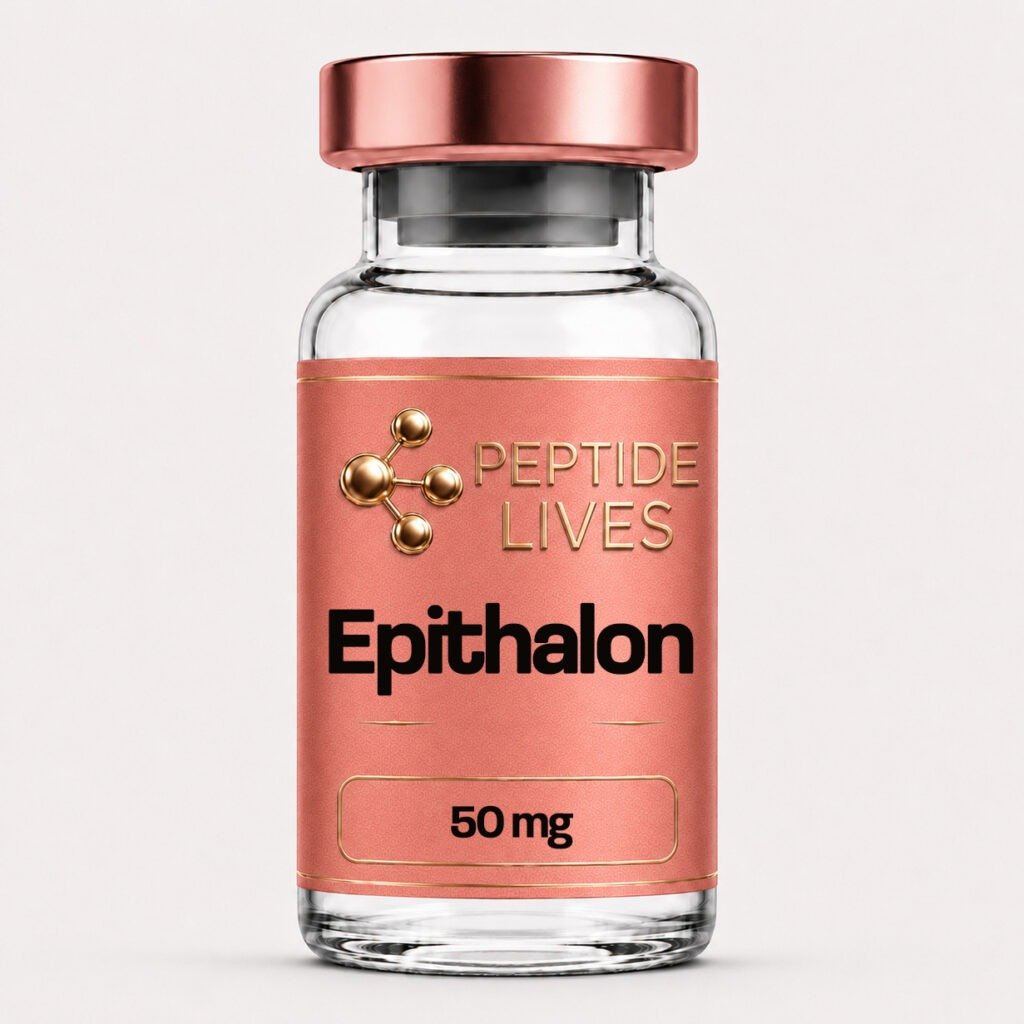
| Vial Content | 50mg |
| Research Category | Cellular Aging and Peptide Bioregulation Research |
These specifications describe the unmodified AEDG tetrapeptide. Salt forms and formulated preparations may differ in overall molecular composition.
Storage and Handling
- Store according to the manufacturer’s validated stability recommendations.
- Keep the research material protected from moisture and direct light.
- Minimize unnecessary temperature fluctuations.
- Keep containers securely sealed.
- Follow appropriate laboratory handling procedures.
Lyophilized Format
Epithalon may be manufactured in lyophilized form. Freeze-drying reduces residual moisture and may support compound stability during storage.
The physical form, composition, and stability of the specific preparation depend on manufacturing and packaging conditions.
Research Use Disclaimer
Epithalon is an experimental research peptide and is not FDA-approved for human therapeutic use.
It is described exclusively for laboratory investigation and is not intended for human or veterinary administration, clinical applications, or diagnosis.
Frequently Asked Questions
What Is Epithalon 50mg?
Epithalon 50mg is a research preparation of a synthetic four-amino-acid peptide containing the sequence Ala-Glu-Asp-Gly.
What Is the Amino Acid Sequence?
The sequence is H-Ala-Glu-Asp-Gly-OH, abbreviated AEDG.
What Are the CAS Number and Molecular Weight?
Epithalon has CAS number 307297-39-8 and a molecular weight of approximately 390.35 g/mol.
What Is the Difference Between Epithalon and Epithalamin?
Epithalon is a chemically defined synthetic tetrapeptide, whereas Epithalamin refers to a more complex preparation historically associated with pineal tissue extracts.
What Research Areas Involve Epithalon?
Research includes telomerase-associated cellular models, chromatin organization, gene expression, and cellular aging mechanisms.
Has Epithalon Been Proven to Extend Human Lifespan?
No. Experimental findings do not establish that Epithalon extends human lifespan.
Is Epithalon FDA-Approved?
No. Epithalon is not FDA-approved for human therapeutic use.
Research Overview
Epithalon has been investigated as a short synthetic peptide bioregulator with potential interactions involving cellular and molecular regulatory systems.
Experimental research has included studies of telomerase activity in human cell cultures, chromatin structure, and age-associated cellular processes.
One frequently cited area of investigation involves the relationship between Epithalon exposure and telomerase activity in selected cultured human somatic cells.
Although these findings have attracted interest in cellular aging research, they do not establish anti-aging effects or clinical efficacy in humans.
Telomerase Research
Telomerase is a ribonucleoprotein enzyme involved in the maintenance of telomeric DNA sequences.
Published laboratory investigations have reported Epithalon-associated changes in telomerase activity in selected human cell cultures.
These results provide a basis for further investigation into relationships between short peptide exposure and telomere-associated cellular processes.
Chromatin Organization Research
Chromatin consists of DNA and associated proteins that regulate the packaging and accessibility of genetic material.
Research involving short peptide bioregulators has examined changes in chromatin organization and transcription-related cellular processes.
Epithalon has been included in experimental investigations of these molecular mechanisms.
Gene Expression Research
Gene expression is controlled through interactions involving transcription factors, chromatin organization, and molecular signaling.
Experimental studies have investigated possible relationships between Epithalon and selected gene regulatory pathways.
The precise molecular targets and mechanisms responsible for observed responses remain incompletely characterized.
Cellular Aging Research
Cellular aging is associated with changes in telomere biology, gene regulation, stress responses, and cellular function.
Epithalon has been studied in experimental models examining some of these processes.
Results from cellular models should not be interpreted as evidence that the peptide reverses aging or extends human lifespan.
Peptide Bioregulation Research
The four-amino-acid AEDG sequence provides a simple molecular structure for investigating peptide-dependent cellular responses.
Comparative studies involving short synthetic peptides can examine relationships between amino acid sequence, molecular interactions, and biological activity.
Research Applications
| Research Area | In Vitro Application |
|---|---|
| Telomerase Research | Telomerase activity measurements in cultured cells |
| Chromatin Research | Chromatin organization and accessibility studies |
| Gene Expression | Experimental transcription-related assays |
| Cellular Aging | Age-associated cellular response models |
| Peptide Bioregulation | Short peptide structure-activity studies |
| Analytical Chemistry | Peptide identity and structural characterization |
References
- Khavinson VK, Bondarev IE, Butyugov AA. (2003). Epithalon Peptide Induces Telomerase Activity and Telomere Elongation in Human Somatic Cells. Bulletin of Experimental Biology and Medicine. View publication.
- Khavinson VK, Malinin VV. Research on Short Peptide Bioregulators and Chromatin-Associated Mechanisms. Related scientific literature.
- PubChem — Epitalon, CID 219042. Chemical structure and molecular specifications.
Certificate of Analysis (COA)
A Certificate of Analysis provides analytical information about a research compound, including its identity, purity, and other measured characteristics.
Depending on the analytical methods performed, available documentation may include high-performance liquid chromatography (HPLC) and mass spectrometry (MS) results.
Researchers should verify the AEDG sequence, chemical identity, purity, and actual compound content using batch-specific analytical documentation.
For information about available Epithalon documentation, contact Peptide Lives.

Reviews
There are no reviews yet.