

Description
Human Menopausal Gonadotropin Technical Overview
Human Menopausal Gonadotropin (HMG), also known as menotropins, is a preparation containing gonadotropin activity associated with follicle-stimulating hormone (FSH) and luteinizing hormone (LH).
Gonadotropins are glycoprotein hormones involved in reproductive endocrine regulation. FSH and LH interact with distinct G protein-coupled receptors and participate in the physiological regulation of ovarian and testicular function.
HMG has been investigated in research involving follicular development, gonadal steroidogenesis, receptor-mediated signaling, and reproductive hormone regulation.
Unlike a single synthetic peptide, HMG is a biologically derived preparation containing glycoprotein hormone activity. Its precise composition and activity profile depend on manufacturing and standardization procedures.
Compound Specifications
| Property | Value |
|---|---|
| Compound Name | Human Menopausal Gonadotropin |
| Alternative Names | HMG, Menotropins |
| Classification | Glycoprotein gonadotropin preparation |
| Primary Hormonal Activities | FSH and LH activity |
| FSH Receptor | FSHR |
| LH Receptor | LHCGR |
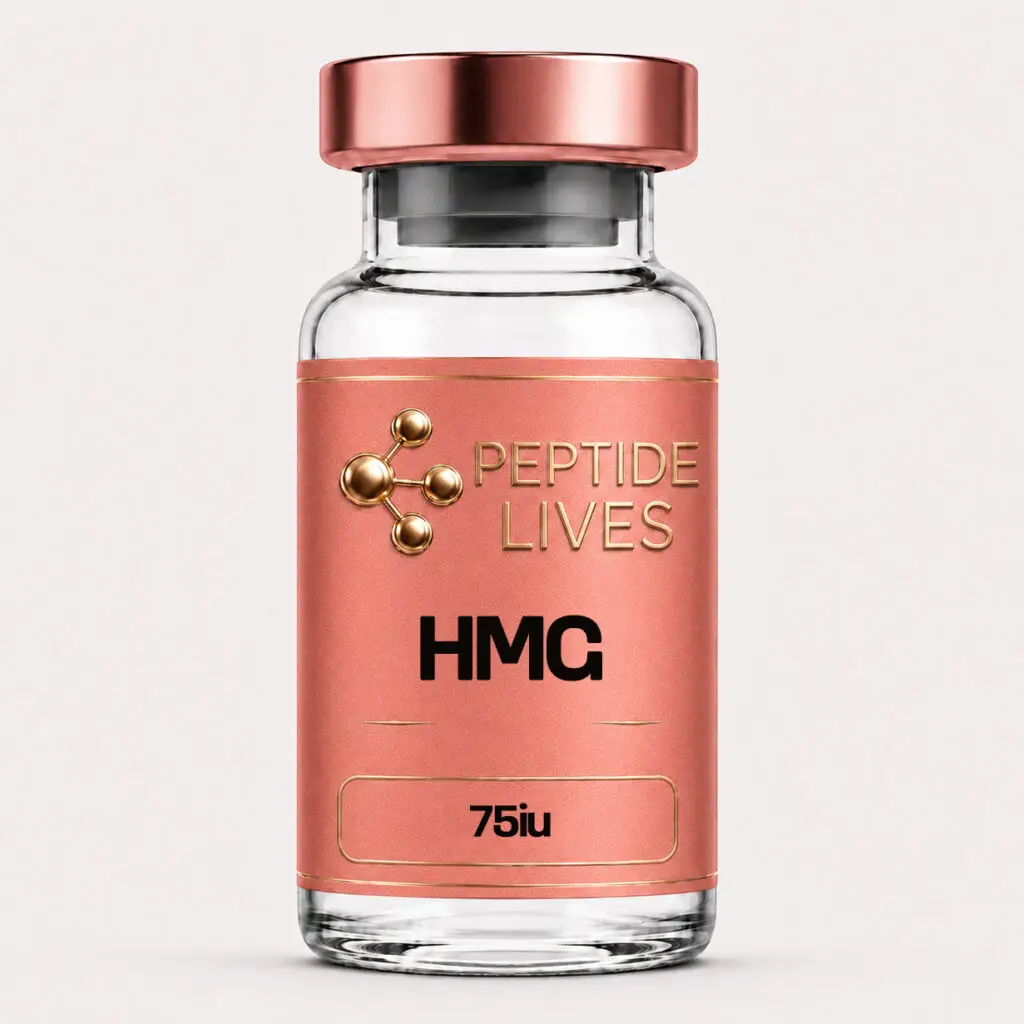
| Listed Strength | 75 IU |
| Individual FSH Activity | Requires product label verification |
| Individual LH Activity | Requires product label verification |
| Single Molecular Formula | Not applicable to the mixture |
| Research Category | Reproductive Endocrinology Research |
Some standardized menotropin products contain 75 IU of FSH activity and 75 IU of LH activity per vial. The product name HMG 75iu alone does not establish that both quantities are present in this specific preparation.
Storage and Handling
- Follow the manufacturer’s validated stability recommendations.
- Protect glycoprotein hormone preparations from contamination and unnecessary temperature fluctuations.
- Use handling procedures appropriate for biologically active protein preparations.
- Confirm storage requirements using the actual product label.
Lyophilized Format
Menotropin preparations may be manufactured in lyophilized form.
Stability depends on protein composition, excipients, packaging, and environmental conditions.
The specific formulation and storage conditions of this HMG product require manufacturer confirmation.
Research Use Disclaimer
FDA-approved prescription menotropin products exist for specific reproductive indications. However, approval of those products does not establish the regulatory status, pharmaceutical equivalence, or suitability for human administration of this preparation.
This material is described exclusively for laboratory research purposes.
Frequently Asked Questions
What Is HMG 75iu?
HMG is a gonadotropin preparation associated with FSH and LH hormonal activity.
What Does IU Mean?
IU means International Unit, a standardized measure of biological activity rather than a direct measurement of mass.
What Receptors Are Associated With HMG?
FSH acts through FSHR, while LH activity is mediated through LHCGR.
Does HMG Have a Single Amino Acid Sequence?
No. HMG contains glycoprotein hormone activity and is not a single chemically defined peptide.
What Research Areas Involve HMG?
Research includes gonadotropin receptor signaling, follicular development, steroidogenesis, and reproductive endocrine regulation.
Research Overview
HMG is relevant to reproductive endocrine research because FSH and LH participate in the regulation of gonadal function through distinct receptor systems.
Experimental investigations have examined receptor activation, intracellular cyclic AMP signaling, and hormone-dependent cellular processes.
FSH Receptor Research
FSH interacts with FSHR, a G protein-coupled receptor involved in gonadal cell signaling.
LH Receptor Research
LH-associated activity is mediated through LHCGR, which participates in steroidogenic signaling.
Follicular Biology Research
FSH and LH signaling have been investigated in studies involving follicular growth, granulosa cell activity, and reproductive hormone regulation.
Glycoprotein Hormone Research
Gonadotropin preparations provide models for studying glycoprotein structure, receptor selectivity, and biological activity standardization.
Research Applications
| Research Area | In Vitro Application |
|---|---|
| FSHR Research | Receptor activation assays |
| LHCGR Research | Gonadotropin signaling studies |
| Reproductive Cell Biology | Hormone-dependent cellular response assays |
| Protein Characterization | Glycoprotein identity and bioactivity analysis |
References
- Casarini L, Santi D, Brigante G, Simoni M. (2018). Two Hormones for One Receptor: Evolution, Biochemistry, Actions, and Pathophysiology of LH and hCG. Endocrine Reviews. View publication.
- DailyMed — Menotropins Product Labeling.
Certificate of Analysis (COA)
Documentation should establish the product’s origin, identity, potency, individual gonadotropin activities, and relevant quality characteristics.
For information about available documentation, contact Peptide Lives.
Human Menopausal Gonadotropin Technical Overview
Human Menopausal Gonadotropin (HMG), also known as menotropins, is a preparation containing gonadotropin activity associated with follicle-stimulating hormone (FSH) and luteinizing hormone (LH).
Gonadotropins are glycoprotein hormones involved in reproductive endocrine regulation. FSH and LH interact with distinct G protein-coupled receptors and participate in the physiological regulation of ovarian and testicular function.
HMG has been investigated in research involving follicular development, gonadal steroidogenesis, receptor-mediated signaling, and reproductive hormone regulation.
Unlike a single synthetic peptide, HMG is a biologically derived preparation containing glycoprotein hormone activity. Its precise composition and activity profile depend on manufacturing and standardization procedures.
Compound Specifications
| Property | Value |
|---|---|
| Compound Name | Human Menopausal Gonadotropin |
| Alternative Names | HMG, Menotropins |
| Classification | Glycoprotein gonadotropin preparation |
| Primary Hormonal Activities | FSH and LH activity |
| FSH Receptor | FSHR |
| LH Receptor | LHCGR |
| Listed Strength | 75 IU |
| Individual FSH Activity | Requires product label verification |
| Individual LH Activity | Requires product label verification |
| Single Molecular Formula | Not applicable to the mixture |
| Research Category | Reproductive Endocrinology Research |
Some standardized menotropin products contain 75 IU of FSH activity and 75 IU of LH activity per vial. The product name HMG 75iu alone does not establish that both quantities are present in this specific preparation.
Storage and Handling
- Follow the manufacturer’s validated stability recommendations.
- Protect glycoprotein hormone preparations from contamination and unnecessary temperature fluctuations.
- Use handling procedures appropriate for biologically active protein preparations.
- Confirm storage requirements using the actual product label.
Lyophilized Format
Menotropin preparations may be manufactured in lyophilized form.
Stability depends on protein composition, excipients, packaging, and environmental conditions.
The specific formulation and storage conditions of this HMG product require manufacturer confirmation.
Research Use Disclaimer
FDA-approved prescription menotropin products exist for specific reproductive indications. However, approval of those products does not establish the regulatory status, pharmaceutical equivalence, or suitability for human administration of this preparation.
This material is described exclusively for laboratory research purposes.
Frequently Asked Questions
What Is HMG 75iu?
HMG is a gonadotropin preparation associated with FSH and LH hormonal activity.
What Does IU Mean?
IU means International Unit, a standardized measure of biological activity rather than a direct measurement of mass.
What Receptors Are Associated With HMG?
FSH acts through FSHR, while LH activity is mediated through LHCGR.
Does HMG Have a Single Amino Acid Sequence?
No. HMG contains glycoprotein hormone activity and is not a single chemically defined peptide.
What Research Areas Involve HMG?
Research includes gonadotropin receptor signaling, follicular development, steroidogenesis, and reproductive endocrine regulation.
Research Overview
HMG is relevant to reproductive endocrine research because FSH and LH participate in the regulation of gonadal function through distinct receptor systems.
Experimental investigations have examined receptor activation, intracellular cyclic AMP signaling, and hormone-dependent cellular processes.
FSH Receptor Research
FSH interacts with FSHR, a G protein-coupled receptor involved in gonadal cell signaling.
LH Receptor Research
LH-associated activity is mediated through LHCGR, which participates in steroidogenic signaling.
Follicular Biology Research
FSH and LH signaling have been investigated in studies involving follicular growth, granulosa cell activity, and reproductive hormone regulation.
Glycoprotein Hormone Research
Gonadotropin preparations provide models for studying glycoprotein structure, receptor selectivity, and biological activity standardization.
Research Applications
| Research Area | In Vitro Application |
|---|---|
| FSHR Research | Receptor activation assays |
| LHCGR Research | Gonadotropin signaling studies |
| Reproductive Cell Biology | Hormone-dependent cellular response assays |
| Protein Characterization | Glycoprotein identity and bioactivity analysis |
References
- Casarini L, Santi D, Brigante G, Simoni M. (2018). Two Hormones for One Receptor: Evolution, Biochemistry, Actions, and Pathophysiology of LH and hCG. Endocrine Reviews. View publication.
- DailyMed — Menotropins Product Labeling.
Certificate of Analysis (COA)
Documentation should establish the product’s origin, identity, potency, individual gonadotropin activities, and relevant quality characteristics.
For information about available documentation, contact Peptide Lives.

Reviews
There are no reviews yet.