

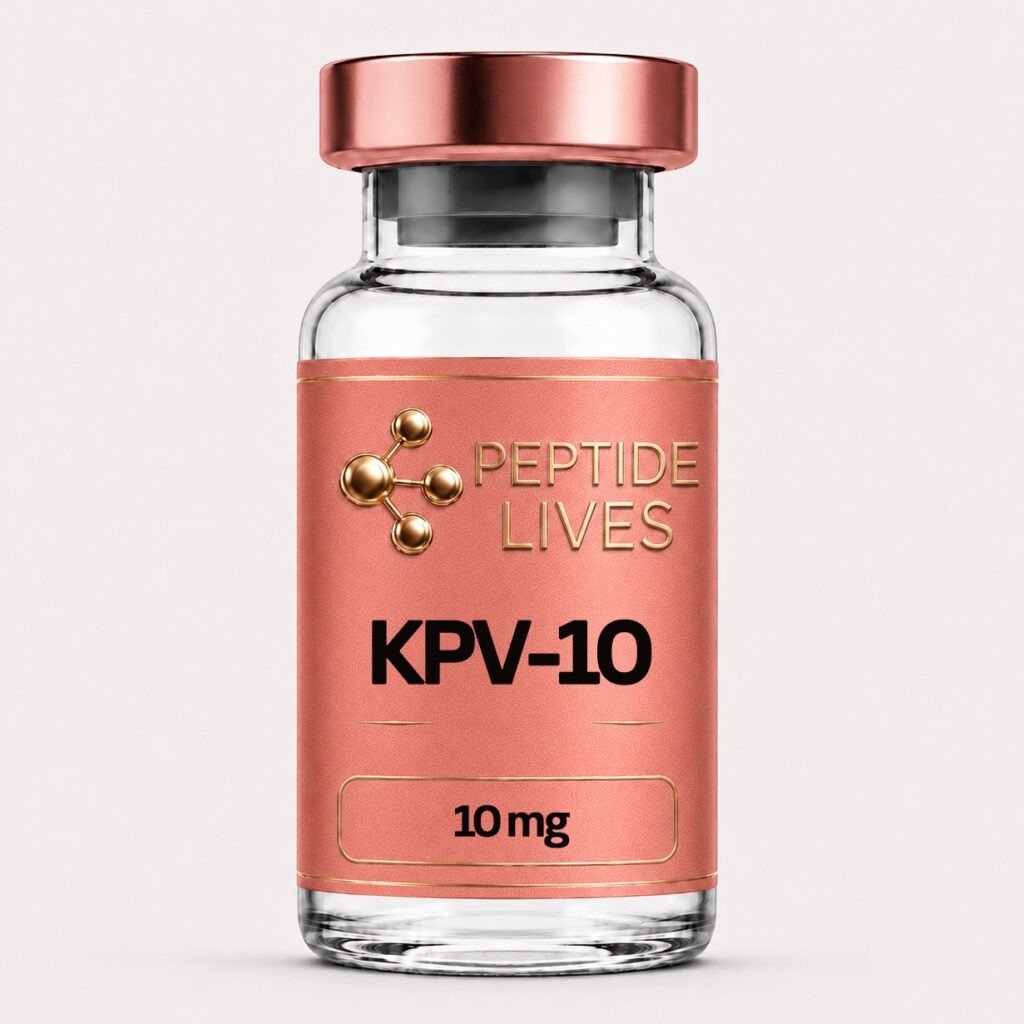
Description
KPV Technical Overview
KPV is a synthetic tripeptide corresponding to the C-terminal Lys-Pro-Val sequence of alpha-melanocyte-stimulating hormone (α-MSH).
It has been investigated in experimental research involving intestinal epithelial cells, inflammatory signaling, and the activity of selected immune-related pathways.
Cellular studies have reported KPV-associated changes in inflammatory mediator production and signaling responses. These experimental findings do not establish clinical efficacy for inflammatory disease.
Compound Specifications
| Property | Value |
|---|---|
| Compound Name | KPV |
| Alternative Name | Lys-Pro-Val |
| Classification | α-MSH-derived tripeptide |
| Amino Acid Sequence | H-Lys-Pro-Val-OH |
| One-Letter Sequence | KPV |
| Sequence Length | 3 amino acids |
| Parent Peptide | Alpha-MSH |
| Source | Synthetic |
| Vial Content | 10mg |
The product name KPV-10 is treated as KPV in a 10mg presentation, not as a distinct ten-amino-acid compound.
Storage and Handling
- Use manufacturer-recommended storage conditions.
- Protect from moisture, light, and contamination.
- Maintain appropriate laboratory handling procedures.
Lyophilized Format
KPV may be supplied in lyophilized form. Batch documentation should identify its actual physical form.
Research Use Disclaimer
KPV is not FDA-approved for human therapeutic use. The compound is intended for laboratory research only and not for human or veterinary administration.
Frequently Asked Questions
What Is KPV?
KPV is a three-amino-acid peptide derived from the C-terminal region of α-MSH.
What Is Its Sequence?
Lys-Pro-Val (KPV).
Does KPV Contain Ten Amino Acids?
No. KPV contains three residues; 10mg describes the listed product strength.
What Research Areas Involve KPV?
Intestinal epithelial signaling, inflammatory pathways, and peptide transport.
Is KPV FDA-Approved?
No.
Research Overview
KPV has been studied as a short α-MSH-derived peptide in experimental systems involving inflammation-associated signaling.
Intestinal Epithelial Research
Cellular models have examined KPV-related responses in intestinal epithelial systems.
Inflammatory Signaling Research
Experiments have investigated selected inflammatory mediator pathways following KPV exposure.
Peptide Transport Research
Studies have examined relationships between short peptide transport systems and KPV uptake.
Research Applications
| Research Area | In Vitro Application |
|---|---|
| Epithelial Biology | Intestinal cell assays |
| Inflammatory Signaling | Cellular mediator measurements |
| Peptide Transport | Transporter interaction studies |
References
Certificate of Analysis (COA)
Analytical documentation should confirm sequence, terminal form, purity, and peptide content.

Reviews
There are no reviews yet.