

Description
Adipotide Technical Overview
Adipotide is an experimental peptide-based construct developed to investigate molecular targeting of blood vessels associated with white adipose tissue.
The research compound combines an adipose vasculature-homing peptide sequence with a proapoptotic component. Its targeting region has been investigated for interactions involving prohibitin, a protein associated with the vasculature of white adipose tissue.
Published experimental research includes studies in mice and obese nonhuman primates. These investigations examined adipose tissue vascular biology, metabolic responses, and the effects of a targeted proapoptotic strategy.
Animal studies also identified important toxicity concerns, including kidney-related adverse findings. Adipotide has not been established as a safe or effective weight-management treatment in humans.
Compound Specifications
| Property | Value |
|---|---|
| Compound Name | Adipotide |
| Research Name | FTPP |
| Compound Classification | Experimental peptide-based construct |
| Targeting Sequence | CKGGRAKDC |
| Structural Components | Vascular targeting sequence and proapoptotic component |
| Research Target | Prohibitin-associated adipose vasculature |
| Complete Sequence | Requires manufacturer confirmation |
| Molecular Formula | Requires verification of complete structure |
| Molecular Weight | Requires verification of complete structure |
| Source | Synthetic |
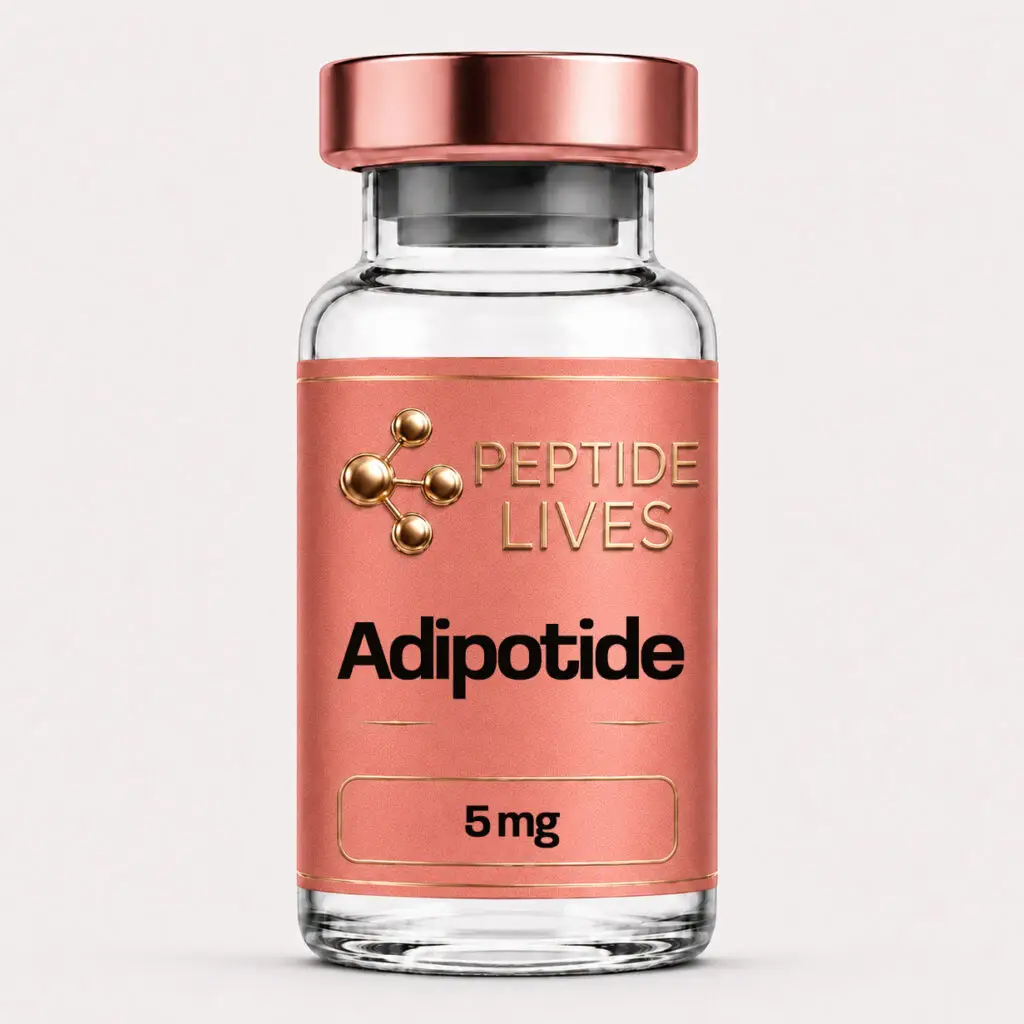
| Vial Content | 5mg |
| Research Category | Adipose Tissue Research |
CKGGRAKDC identifies the targeting sequence rather than the entire Adipotide molecule. The complete peptide construct must be confirmed using structural documentation.
Storage and Handling
- Store under manufacturer-validated stability conditions.
- Keep the research material protected from moisture and light.
- Minimize unnecessary temperature fluctuations.
- Follow institutional procedures for handling experimental cytotoxic materials.
Lyophilized Format
Adipotide may be produced in lyophilized form. The formulation, stability, and physical appearance of the supplied preparation require confirmation through manufacturer documentation.
Research Use Disclaimer
Adipotide is an experimental compound with significant unresolved safety concerns. It is not FDA-approved for weight management or other therapeutic applications. Not intended for human or veterinary administration.
Frequently Asked Questions
What Is Adipotide 5mg?
Adipotide is an experimental peptide-based research compound designed around molecular targeting of white adipose tissue vasculature.
What Is the Research Target?
The peptide’s targeting component has been investigated in connection with prohibitin associated with adipose tissue blood vessels.
What Is the Targeting Sequence?
The reported targeting sequence is CKGGRAKDC. This is not the complete Adipotide construct.
Has Adipotide Been Studied in Animals?
Yes. Published experimental studies include mice and obese nonhuman primates.
Is Adipotide Approved for Human Use?
No. Adipotide is not an FDA-approved therapeutic compound.
Research Overview
Research into Adipotide originated from investigations of molecular targets associated with white adipose tissue vasculature. Researchers identified peptide sequences capable of interacting with proteins expressed in selected vascular environments.
Subsequent studies combined tissue-targeting sequences with proapoptotic components to investigate targeted vascular disruption in animal models.
Prohibitin Targeting Research
Experimental investigations identified prohibitin as a protein associated with the targeting of adipose tissue blood vessels.
Adipose Vasculature Research
Research examined whether targeted changes in adipose tissue vasculature could influence adipose tissue physiology.
Nonhuman Primate Research
A 2011 study investigated a targeted peptidomimetic in obese rhesus monkeys. Researchers reported changes in body weight and metabolic measurements, alongside kidney-related toxicity findings.
Experimental Toxicology
Adipotide research highlights the importance of evaluating tissue-targeted compounds for effects outside their intended experimental targets.
Research Applications
| Research Area | In Vitro Application |
|---|---|
| Prohibitin Research | Protein targeting and interaction studies |
| Adipose Tissue Biology | Vascular and cellular models |
| Peptide Engineering | Targeting sequence characterization |
| Toxicology Research | Cellular safety and off-target investigations |
References
- Kolonin MG, Saha PK, Chan L, Pasqualini R, Arap W. (2004). Reversal of Obesity by Targeted Ablation of Adipose Tissue. Nature Medicine. View publication.
- Barnhart KF, Christianson DR, Hanley PW, et al. (2011). A Peptidomimetic Targeting White Fat Causes Weight Loss and Improved Insulin Resistance in Obese Monkeys. Science Translational Medicine. View publication.
Certificate of Analysis (COA)
Documentation should establish the complete peptide structure, identity, purity, and compound content. Verification of the targeting fragment alone is insufficient to establish the chemical identity of the full construct.
For available product documentation, contact Peptide Lives.

Reviews
There are no reviews yet.