

Description
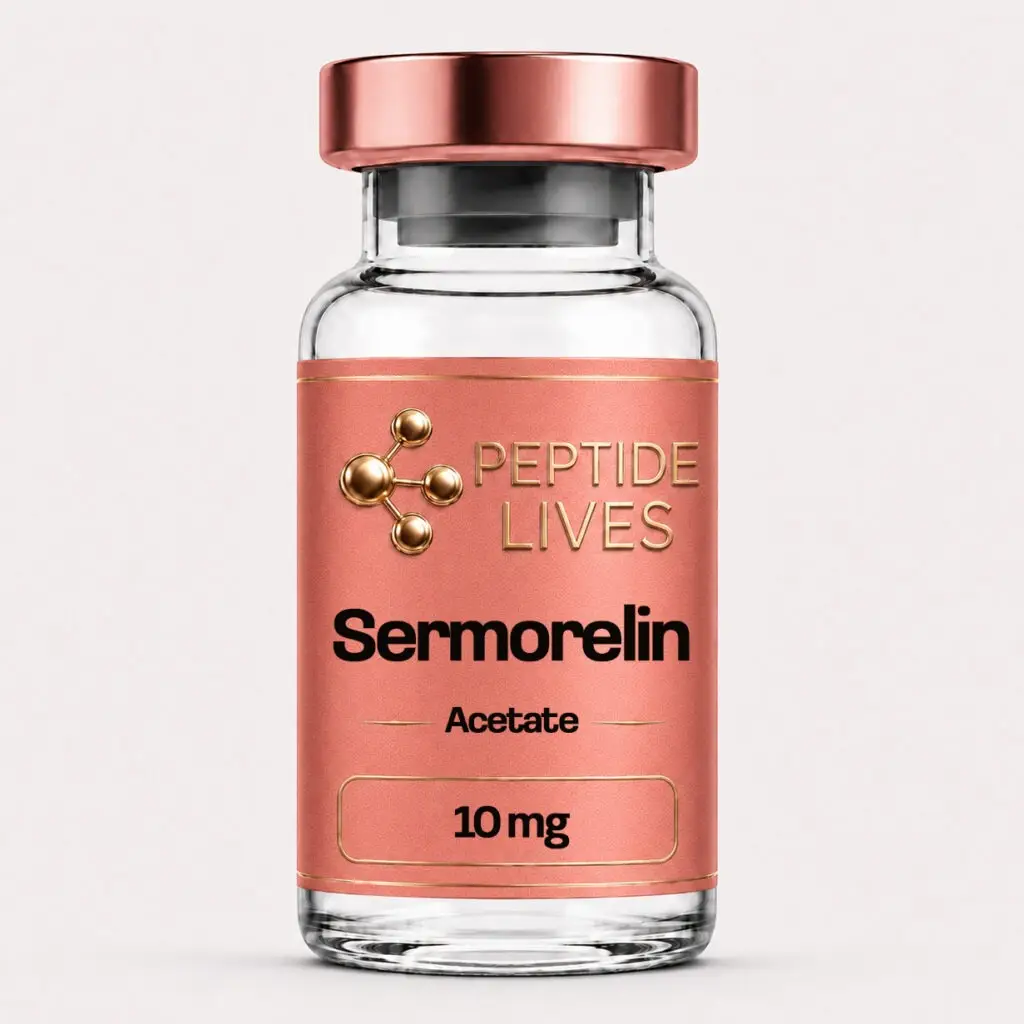
Sermorelin Acetate Technical Overview
Sermorelin Acetate is a synthetic peptide corresponding to the biologically active N-terminal 29-amino-acid fragment of human growth hormone-releasing hormone (GHRH). It is commonly described as GHRH(1–29)-NH2 or growth hormone-releasing factor 1–29.
The peptide interacts with the growth hormone-releasing hormone receptor (GHRHR), a class B G protein-coupled receptor expressed in pituitary somatotroph cells. Receptor activation stimulates intracellular signaling pathways associated with cyclic AMP production and growth hormone secretion.
Sermorelin has been investigated in experimental and clinical endocrine research involving GHRHR pharmacology, pituitary signaling, and growth hormone regulation. The acetate designation refers to a salt preparation of the peptide and should be distinguished from the molecular structure of the parent peptide.
Compound Specifications
| Property | Value |
|---|---|
| Compound Name | Sermorelin Acetate |
| Parent Peptide | Sermorelin |
| Parent Peptide CAS Number | 86168-78-7 |
| PubChem CID | 16132413 |
| Parent Peptide Molecular Formula | C149H246N44O42S |
| Parent Peptide Molecular Weight | 3357.9 g/mol |
| Amino Acid Sequence | YADAIFTNSYRKVLGQLSARKLLQDIMSR |
| Sequence Length | 29 amino acid residues |
| C-Terminal Structure | Amidated (-NH2) |
| Peptide Classification | GHRH analogue |
| Primary Research Receptor | GHRHR |
| Salt Form | Acetate |
| Vial Content | 10mg |
| Research Category | Endocrine Research |
The molecular formula, CAS number, and molecular weight above describe the parent Sermorelin peptide. The acetate salt may have a different overall composition depending on acetate stoichiometry.
Storage and Handling
- Store according to the manufacturer’s validated stability recommendations.
- Protect the peptide from moisture, direct light, and contamination.
- Avoid unnecessary temperature fluctuations.
- Follow handling procedures appropriate for research-grade peptide materials.
- Consult batch-specific documentation for formulation-dependent storage requirements.
Lyophilized Format
Sermorelin Acetate may be supplied in lyophilized form. Freeze-drying reduces moisture content and can support stability when suitable packaging and storage conditions are maintained.
The actual physical form and storage requirements should be confirmed using manufacturer documentation.
Research Use Disclaimer
Sermorelin Acetate is described here exclusively as a laboratory research material. It is not intended for human or veterinary administration.
Historical FDA-approved pharmaceutical Sermorelin products should not be confused with independently supplied research preparations. No pharmaceutical approval is claimed for this Peptide Lives product.
Frequently Asked Questions
What Is Sermorelin Acetate 10mg?
Sermorelin Acetate 10mg is a research preparation of the 29-amino-acid GHRH fragment known as Sermorelin.
What Is the Amino Acid Sequence?
The sequence is YADAIFTNSYRKVLGQLSARKLLQDIMSR, with an amidated C-terminus.
What Receptor Does Sermorelin Activate?
Sermorelin interacts with the growth hormone-releasing hormone receptor, GHRHR.
What Is the Difference Between Sermorelin and CJC-1295?
Sermorelin corresponds to the native GHRH(1–29) sequence, while CJC-1295-related research compounds contain additional molecular modifications.
What Does Acetate Mean?
Acetate refers to the salt form of the peptide. It does not change the underlying 29-residue Sermorelin sequence.
What Research Areas Involve Sermorelin?
Research includes GHRHR signaling, pituitary somatotroph biology, cyclic AMP pathways, and growth hormone regulation.
Research Overview
Sermorelin contains the N-terminal region of human GHRH responsible for receptor-associated biological activity.
The peptide has been investigated as an experimental ligand for studying the regulation of growth hormone secretion through hypothalamic-pituitary signaling mechanisms.
GHRHR activation is associated with G protein-mediated stimulation of adenylyl cyclase and intracellular cyclic AMP production.
GHRHR Receptor Research
GHRHR is a class B G protein-coupled receptor involved in pituitary growth hormone regulation.
Research investigates ligand binding, receptor activation, and downstream cellular responses.
cAMP Signaling Research
Sermorelin-associated receptor activation can stimulate intracellular cyclic AMP production.
These signaling processes contribute to investigations of endocrine receptor pharmacology and pituitary cellular responses.
Growth Hormone Research
Experimental and clinical studies have examined the relationship between GHRH-derived peptides and growth hormone secretion.
Such research provides information about endogenous growth hormone regulation but does not establish the effectiveness of a particular research-grade preparation.
Peptide Structure Research
The defined 29-amino-acid structure provides a reference for comparisons with modified GHRH analogues.
Researchers can investigate relationships between peptide sequence, receptor activation, and molecular stability.
Research Applications
| Research Area | In Vitro Application |
|---|---|
| GHRHR Signaling | Growth hormone-releasing hormone receptor assays |
| cAMP Research | Intracellular second-messenger measurements |
| Pituitary Biology | Somatotroph cellular signaling studies |
| Peptide Chemistry | GHRH fragment characterization |
| Receptor Pharmacology | Comparative ligand activation research |
References
- PubChem — Sermorelin, CID 16132413. Chemical structure, sequence, and molecular properties.
- Sermorelin and GHRH(1–29) Research — PubMed.
- GHRH Receptor Signaling Research — PubMed.
Certificate of Analysis (COA)
Researchers should review batch-specific documentation confirming the Sermorelin sequence, acetate composition, purity, and actual peptide content.
For available analytical documentation, contact Peptide Lives.

Reviews
There are no reviews yet.