

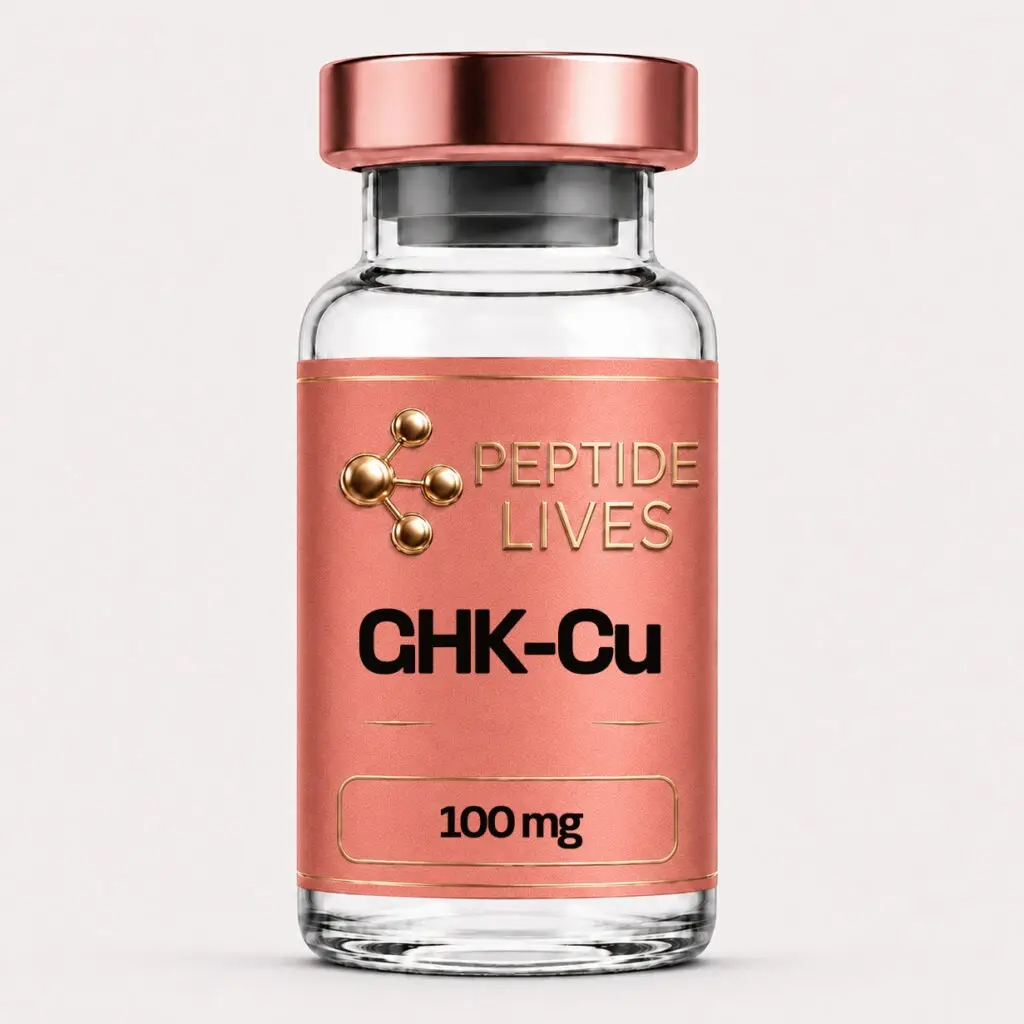
Description
GHK-Cu Technical Overview
GHK-Cu is a copper complex of the naturally occurring tripeptide glycyl-L-histidyl-L-lysine (GHK). The peptide was originally identified in human plasma and has been investigated for its copper-binding properties and biological activity.
GHK-Cu is studied in experimental research involving dermal fibroblasts, extracellular matrix proteins, collagen-associated pathways, cellular migration, and copper-dependent signaling.
Published studies have examined changes in gene expression and cell behavior following exposure to GHK and copper-peptide preparations. These findings support its use as a research subject but do not establish therapeutic effects for a particular commercial preparation.
Compound Specifications
| Property | Value |
|---|---|
| Compound Name | GHK-Cu |
| Parent Peptide | Glycyl-L-histidyl-L-lysine |
| Sequence | H-Gly-His-Lys-OH |
| One-Letter Sequence | GHK |
| Sequence Length | 3 amino acid residues |
| Metal Component | Copper |
| Classification | Copper tripeptide complex |
| Research Category | Skin and Extracellular Matrix Research |
| Vial Content | 100mg |
The parent peptide and its copper complex have different chemical specifications. Counterion content and coordination chemistry affect the overall formula and molecular mass.
Storage and Handling
- Follow manufacturer-provided stability recommendations.
- Protect from moisture, unnecessary light, and contamination.
- Account for interactions with metal-binding chemicals in experimental formulations.
Lyophilized Format
GHK-Cu may be supplied in lyophilized form. The physical appearance and stability of a particular copper-peptide complex depend on its formulation.
Research Use Disclaimer
GHK-Cu is described for laboratory research only and is not represented as an FDA-approved pharmaceutical preparation. Not intended for human or veterinary administration.
Frequently Asked Questions
What Is GHK-Cu?
A copper complex of the tripeptide Gly-His-Lys.
What Is Its Amino Acid Sequence?
GHK.
What Is the Difference Between GHK and GHK-Cu?
GHK refers to the parent peptide, while GHK-Cu describes its copper-associated complex.
What Research Areas Involve GHK-Cu?
Fibroblast biology, extracellular matrix signaling, collagen-associated pathways, and copper-binding chemistry.
Is GHK-Cu the Same as AHK-Cu?
No. Their first amino acid residues differ.
Research Overview
GHK-Cu has been investigated as a biologically active copper-peptide complex in connective tissue and cellular research.
Fibroblast Research
Studies have examined GHK-associated changes in fibroblast responses and cellular signaling.
Extracellular Matrix Research
Investigations have evaluated collagen-associated and other matrix-related pathways.
Gene Expression Research
Experimental research has analyzed transcriptional changes linked to GHK exposure.
Copper Binding Research
GHK offers a defined molecular structure for studying peptide-metal coordination.
Research Applications
| Research Area | In Vitro Application |
|---|---|
| Fibroblast Biology | Cellular response assays |
| Extracellular Matrix | Collagen-associated pathway analysis |
| Gene Expression | Transcriptional profiling |
| Coordination Chemistry | Copper-peptide binding studies |
References
- Pickart L, Margolina A. (2018). Regenerative and Protective Actions of the GHK-Cu Peptide in the Light of the New Gene Data. International Journal of Molecular Sciences. View publication.
Certificate of Analysis (COA)
Analytical documentation should confirm GHK peptide identity, copper complex composition, purity, and actual content.

Reviews
There are no reviews yet.