

Description
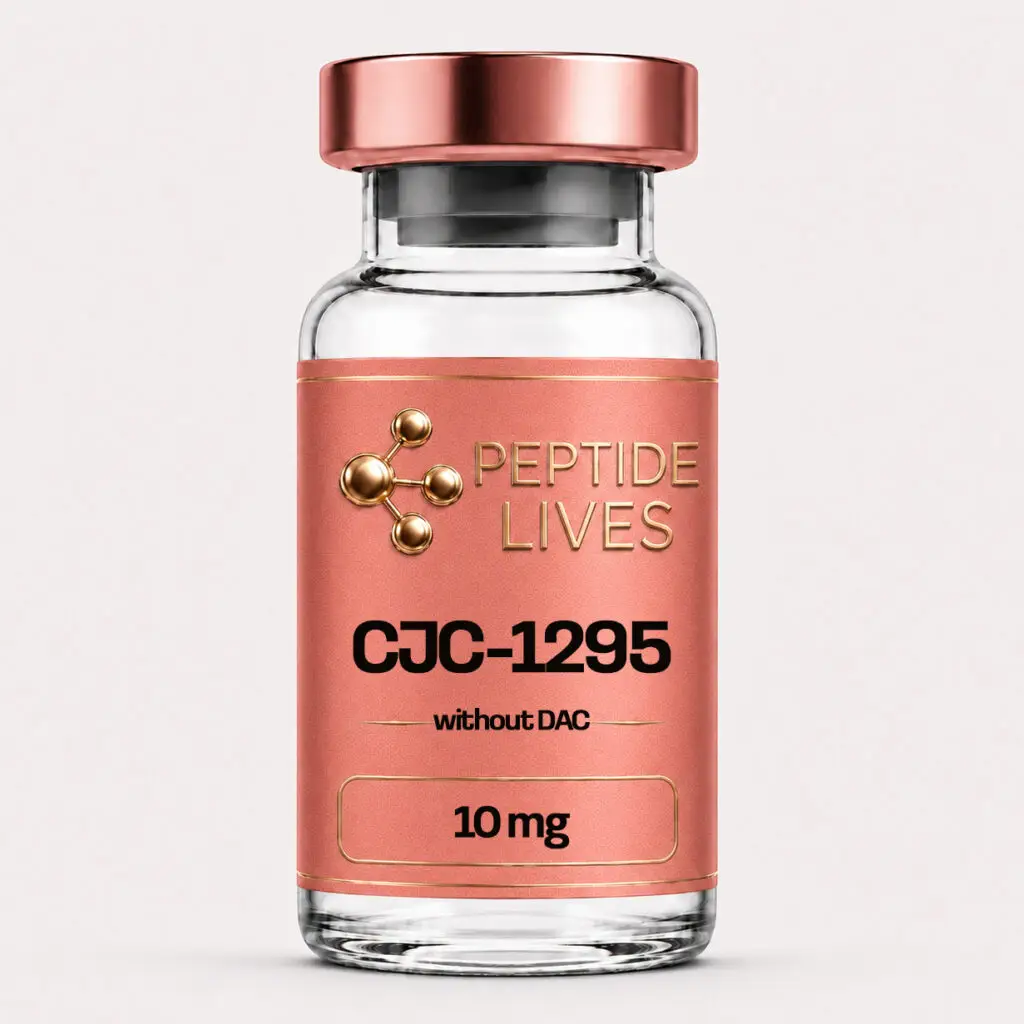
CJC-1295 Without DAC Technical Overview
CJC-1295 without DAC is a commercial designation commonly applied to Modified GRF(1–29), a synthetic analogue of the N-terminal 29-amino-acid region of growth hormone-releasing hormone.
The compound contains modifications intended to influence peptide stability while retaining GHRH receptor-associated activity.
Unlike CJC-1295 with DAC, this preparation does not contain an albumin-binding Drug Affinity Complex.
Compound Specifications
| Property | Value |
|---|---|
| Product Name | CJC-1295 Without DAC |
| Common Research Name | Modified GRF(1–29) |
| Classification | Modified GHRH analogue |
| Sequence Length | 29 residues |
| Research Receptor | GHRHR |
| DAC Modification | Absent |
| Vial Content | 10mg |
Storage and Handling
- Follow manufacturer-validated conditions.
- Protect from moisture, light, and contamination.
- Use appropriate laboratory peptide handling procedures.
Lyophilized Format
Modified GRF(1–29) may be supplied in lyophilized form. Actual stability depends on formulation.
Research Use Disclaimer
Modified GRF(1–29) is not FDA-approved for human therapeutic use. Not intended for human or veterinary administration.
Frequently Asked Questions
What Is CJC-1295 Without DAC?
A commercial name associated with Modified GRF(1–29).
How Many Amino Acids Does It Contain?
29.
What Receptor Does It Target?
GHRHR.
How Does It Differ From CJC-1295 With DAC?
It lacks the albumin-binding modification.
Research Overview
Modified GRF(1–29) is investigated in GHRH receptor and peptide stability research.
GHRHR Signaling
Experiments study receptor activation and cellular signaling.
Peptide Stability
Research examines changes in stability associated with amino acid substitutions.
Endocrine Research
Studies investigate growth hormone-releasing hormone pathways.
Research Applications
| Research Area | In Vitro Application |
|---|---|
| GHRHR | Receptor activation assays |
| Peptide Chemistry | Sequence characterization |
| Endocrinology | Cellular signaling research |
References
Certificate of Analysis (COA)
Documentation should confirm modified peptide identity, purity, and content.

Reviews
There are no reviews yet.